


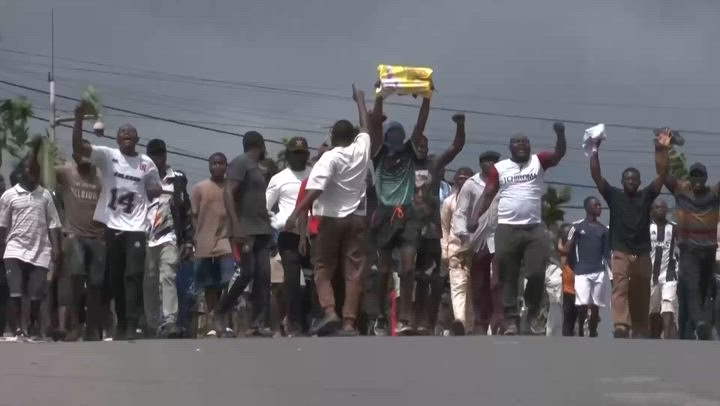
Cameroon entered its second day of unrest on Tuesday after the official declaration of President Paul Biya’s re-election sparked widespread protests, violent crackdowns, and growing international condemnation. Security forces flooded major cities; including Yaoundé, Douala, and Garoua as demonstrators took to the streets to reject the results announced by the Constitutional Council. In Douala, the country’s largest commercial city, protesters erected barricades and blocked key roads, while shops, markets, and schools remained shuttered for a second straight day. Local media reported several civilian deaths and dozens of arrests, though authorities have not confirmed casualty figures. Human rights organizations accused police of using live ammunition and arbitrary detention to suppress dissent. In Garoua, a relative calm returned by late Tuesday, but residents said tensions remained high, with soldiers patrolling neighborhoods.
The European Union issued a sharp rebuke, expressing “deep concern” over the violent repression of demonstrations and the reported deaths of protesters by firearm. Brussels called for independent investigations, the release of detained demonstrators, and renewed dialogue between the government and opposition. In a sign of diplomatic disapproval, ambassadors from the U.S., Canada, and the EU boycotted the Constitutional Council’s results session on Monday, a move widely interpreted as a protest against the lack of transparency in the election process.
Reactions from opposition figures reflected deep divisions. Issa Tchiroma Bakary, who finished second, rejected the results outright, describing them as “a national betrayal.” Patricia Hermine Tomaïno Ndam Njoya, who placed fifth, said the “electoral system has been corrupted and manipulated beyond repair.” Meanwhile, Cabral Libii, who came third, struck a more cautious tone acknowledging the results “as proclaimed” but urging his supporters to prepare for local and parliamentary elections rather than engage in street protests.
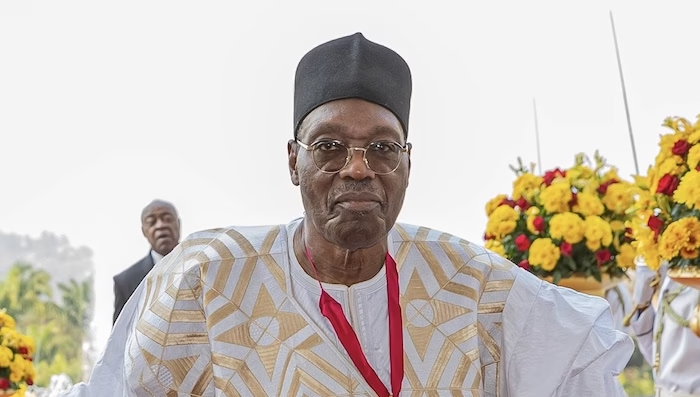
The disputed election extends President Paul Biya’s 42-year rule, making him Africa’s oldest serving head of state at 92. Critics accuse his administration of authoritarianism, electoral manipulation, and economic mismanagement, while supporters credit him with maintaining relative stability in a volatile region. As international observers call for calm and reform, Cameroonians remain divided between fatigue from decades of political stagnation and hope for a democratic transition that still feels out of reach.


