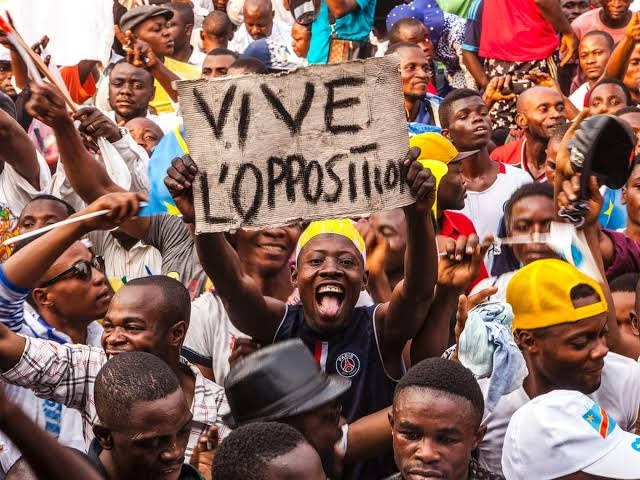

Opposition parties in the Democratic Republic of the Congo (DRC) have postponed planned nationwide protests after President Félix Tshisekedi agreed to launch a national dialogue aimed at easing growing political tensions over proposed constitutional reforms. The demonstrations, scheduled for July 22, were organized by the opposition coalition C64, a platform bringing together several political parties and civil society groups. Established in May, the coalition takes its name from Article 64 of the DRC Constitution, which gives citizens the right to resist any unconstitutional seizure or exercise of power. C64 has accused President Tshisekedi of attempting to use a proposed constitutional referendum to extend his time in office beyond the two-term presidential limit. The coalition has described the initiative as a “constitutional coup” and had initially called for mass demonstrations demanding the president’s resignation and the protection of the country’s constitution.
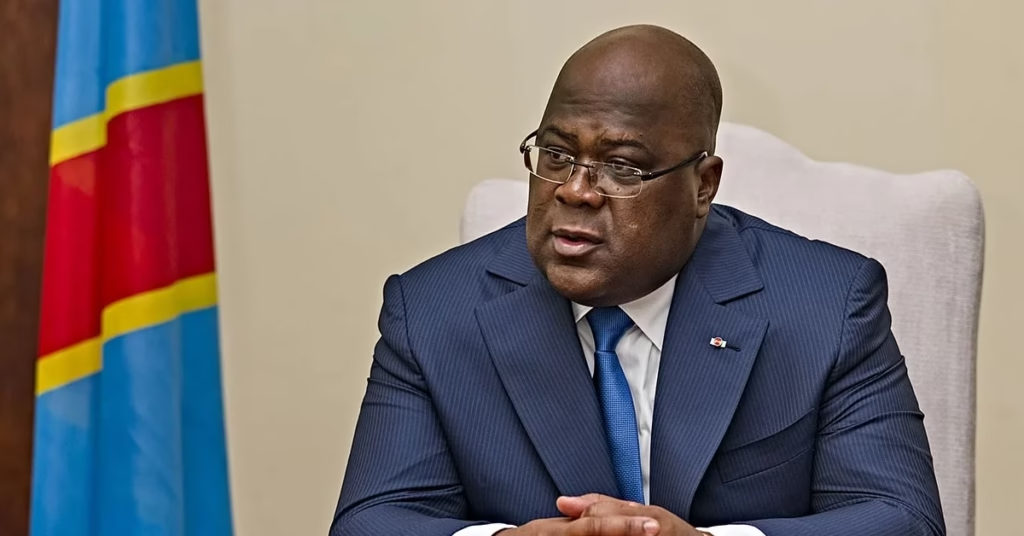
The protests had already been postponed once after the African Union (AU) invited opposition leaders to participate in consultations aimed at finding a peaceful solution to the political dispute. Following AU-mediated talks, both the government and opposition agreed that the national dialogue will be facilitated by religious leaders and convened before August 15. The discussions are expected to focus on constitutional reform, governance and measures to reduce political tensions ahead of future elections. C64 said it would suspend further demonstrations while the dialogue process is underway but warned it could resume protests if the government proceeds with legislation authorizing a constitutional referendum or takes what it described as other provocative actions.
Political tensions have been rising in the DRC since discussions emerged about possible constitutional changes. Critics fear the reforms could remove presidential term limits, while the government maintains that any constitutional review would follow legal and democratic procedures. The latest developments follow clashes in Kinshasa in May, when a C64-organized protest turned violent after confrontations between demonstrators and security forces, further deepening divisions between the government and opposition. The African Union has urged all parties to resolve their differences through dialogue, emphasizing that political stability is essential as the DRC continues to face security challenges in its conflict-affected eastern provinces and broader efforts to strengthen democratic governance.