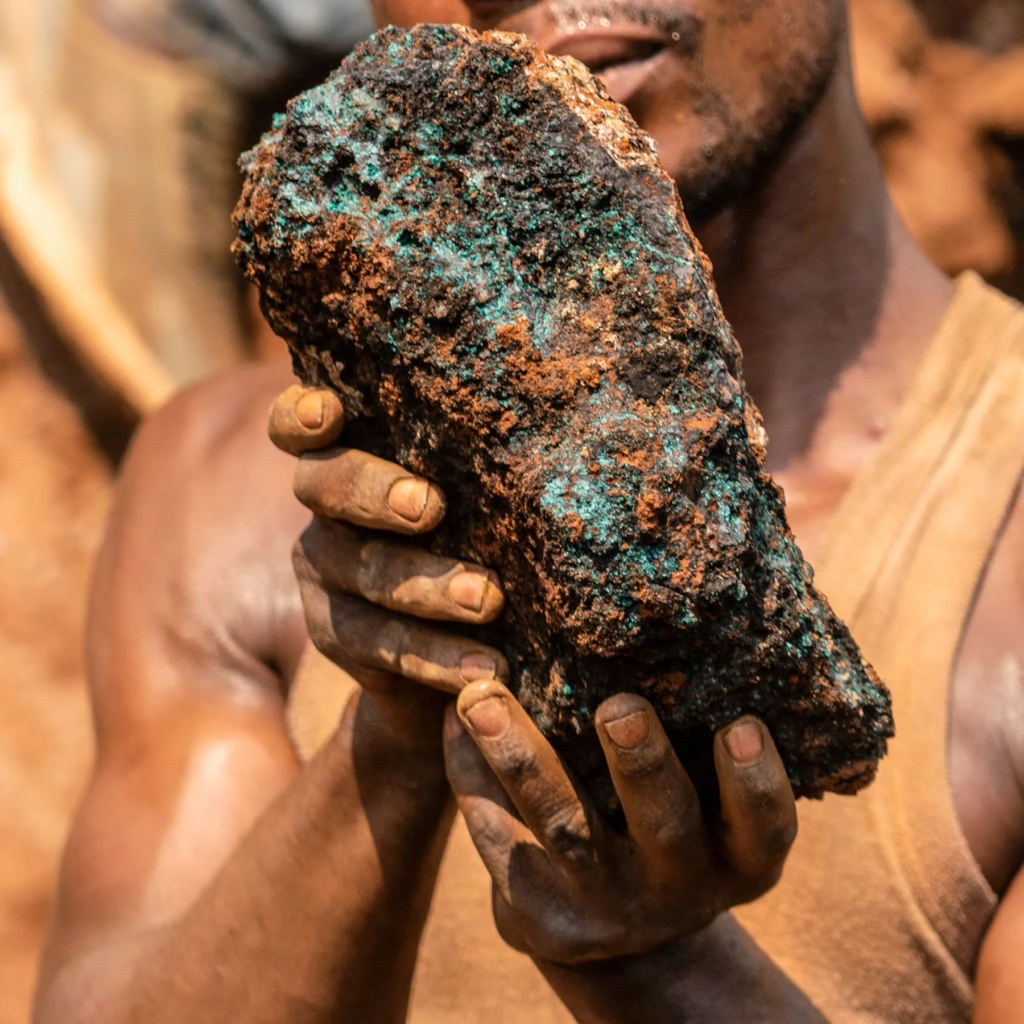

The Democratic Republic of Congo (DRC) has announced the production of its first 1,000 metric tonnes of fully traceable artisanal cobalt, marking a major step toward reforming one of the world’s most controversial mining sectors. The milestone was reached by Entreprise Générale du Cobalt (EGC), the state agency created to regulate and formalise artisanal cobalt mining. It comes as global demand for cobalt essential for electric vehicle batteries, smartphones, and renewable energy storage continues to surge.
The DRC holds around 72% of global cobalt reserves and supplies over 74% of the world’s cobalt, but the sector has long been dominated by informal artisanal mines. An estimated 1.5 million Congolese rely on artisanal mining, often working in unsafe conditions that expose children and adults to hazardous pits, toxic dust, and exploitative labour practices. These human rights concerns have put pressure on global manufacturers, as major automakers and tech companies now insist on proof of ethical sourcing to comply with stricter global environmental, social, and governance (ESG) requirements.
The International Energy Agency predicts cobalt demand will rise by 40% by 2030, driven largely by the global transition to electric mobility. By introducing traceable artisanal cobalt, the DRC aims to clean up its supply chain and reassure international buyers. EGC says the traceability system will allow cobalt to be tracked from mine to export, helping eliminate child labour, improve safety, and reduce environmental damage. The government hopes the move will serve as a model for formalising the broader artisanal mining sector and ensuring Congo retains greater value from its mineral wealth.