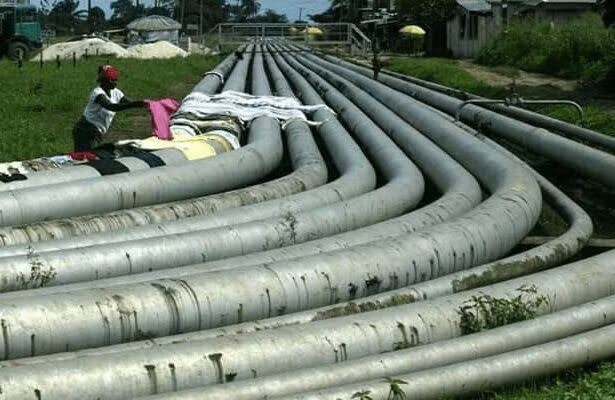

West African leaders have approved the long-awaited Nigeria-Morocco Gas Pipeline (NMGP), signing a key agreement during the Economic Community of West African States (ECOWAS) summit in Freetown, Sierra Leone, marking a major milestone for one of Africa’s largest energy infrastructure projects. The proposed 6,000-kilometre pipeline will transport natural gas from Nigeria through 13 West African coastal countries before reaching Morocco, where it will connect with the Maghreb-Europe Gas Pipeline, creating a new energy corridor linking West Africa to European markets. Announcing the agreement, ECOWAS Chairman and Sierra Leonean President Julius Maada Bio said the project demonstrates the region’s commitment to economic integration and long-term energy security.
The pipeline is being jointly developed by Nigeria’s National Petroleum Company (NNPC) and Morocco’s National Office of Hydrocarbons and Mines (ONHYM). According to both agencies, the project is designed to unlock West Africa’s vast natural gas reserves, expand electricity access, stimulate industrial growth and strengthen regional trade while supplying cleaner energy to millions of people. The project is also expected to enhance energy cooperation between West Africa, the Sahel, Morocco and Europe by improving gas distribution networks and encouraging cross-border investment. As part of the implementation plan, a dedicated project company will be established in Casablanca, while a governing authority will be headquartered in Abuja to oversee development before international investors are invited and a final investment decision is made. Officials expect construction to begin in 2028, with the first gas deliveries projected for 2031.
First proposed during King Mohammed VI’s visit to Nigeria in 2016, the pipeline is estimated to cost about $27 billion, making it one of the continent’s most ambitious cross-border infrastructure projects. The initiative has gained renewed momentum following Algeria’s decision in 2022 to halt gas exports to Spain through Morocco after diplomatic relations between Algiers and Rabat deteriorated. The Nigeria-Morocco pipeline is expected to provide an alternative supply route while reinforcing Africa’s role in global energy markets. If completed as planned, the NMGP is expected to improve energy access across participating countries, support economic development, create thousands of jobs and strengthen Africa’s energy security through greater regional integration.