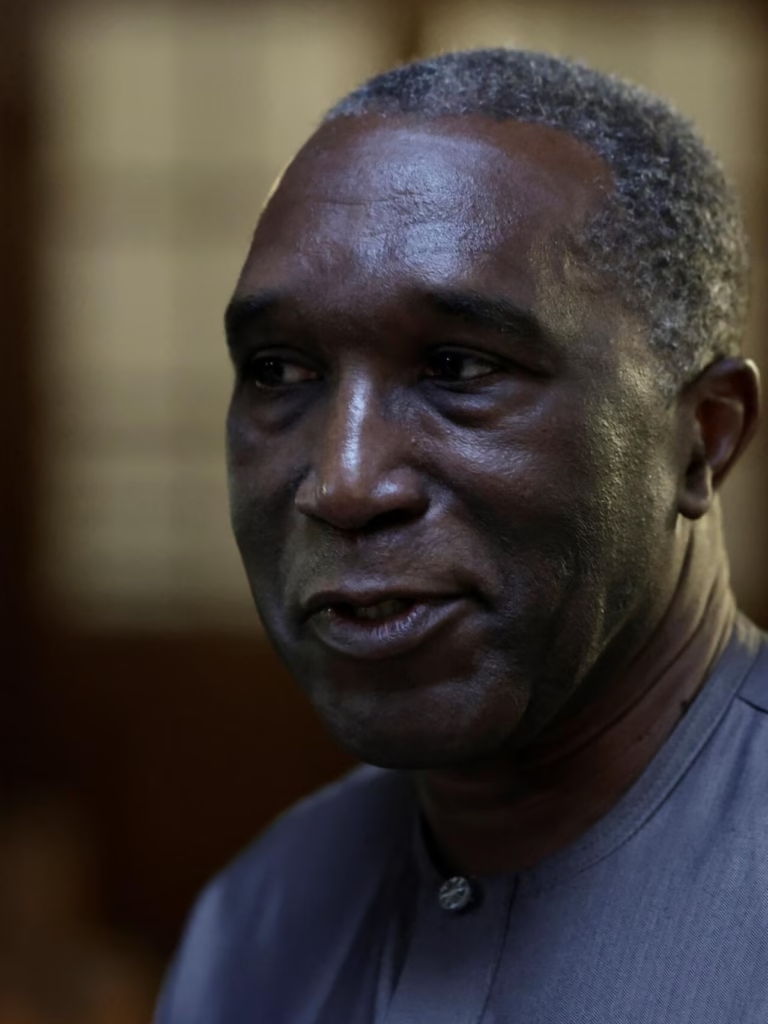

A French appeals court has upheld the 27-year prison sentence imposed on former Rwandan doctor Eugène Rwamucyo for his role in the 1994 Genocide against the Tutsi, reaffirming his conviction for complicity in one of the worst atrocities in modern history. A judicial source confirmed that the Paris Court of Appeal delivered its ruling late Friday, upholding the sentence originally handed down in October 2024. Rwamucyo, 67, was found guilty of complicity in genocide, complicity in crimes against humanity, and participating in a criminal conspiracy to prepare those crimes. However, the court acquitted him of direct charges of genocide and crimes against humanity. His appeal trial began in Paris on June 9 and lasted six weeks, during which prosecutors and defence lawyers presented arguments over his alleged involvement in the mass killings that claimed the lives of an estimated 800,000 people, most of them ethnic Tutsi, during the 1994 genocide in Rwanda.
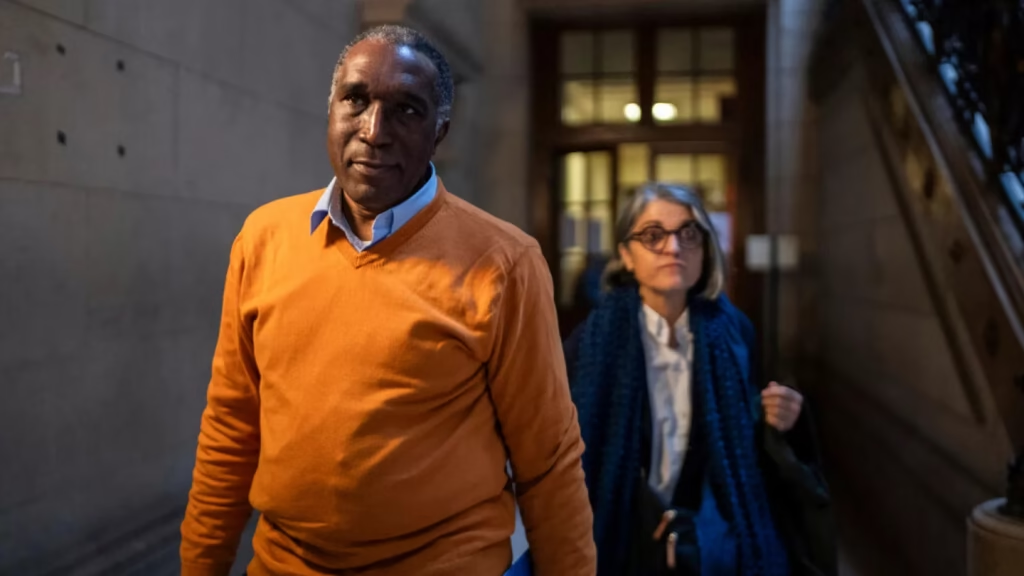
The case was prosecuted under France’s universal jurisdiction laws, which allow French courts to try individuals accused of genocide, crimes against humanity and other serious international crimes committed outside French territory. According to French prosecutors, Rwamucyo, who comes from a Hutu family, became associated with anti-Tutsi extremists after returning to Rwanda from studies in the former Soviet Union during the late 1980s. Prosecutors alleged that he promoted anti-Tutsi propaganda and later participated in the killing of wounded patients at a university hospital during the genocide. The prosecution further argued, citing witness testimony, that Rwamucyo helped organize the burial of victims in mass graves in an effort to conceal evidence of the genocide.
Rwamucyo has consistently denied all allegations. His defense team argued that the accusations were politically motivated and linked to his criticism of Rwanda’s current government, maintaining that there was insufficient evidence to support the convictions. The ruling represents another milestone in international efforts to hold genocide suspects accountable decades after the 1994 massacres. France has increasingly pursued cases involving alleged perpetrators who sought refuge on its territory, as part of broader international cooperation to deliver justice for victims and survivors of the genocide. The decision reinforces France’s commitment to prosecuting serious international crimes and underscores the continued global pursuit of accountability for those accused of participating in the Rwandan genocide.