
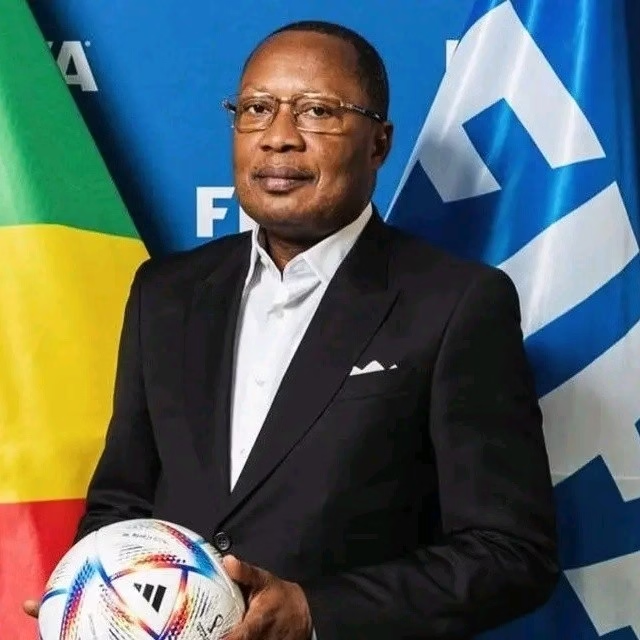

A criminal court in Brazzaville has sentenced former football federation president Jean-Guy Blaise Mayolas to life in prison after finding him guilty of embezzling about $1.1 million in funds from FIFA. The court convicted Mayolas of money laundering, forgery, using forged documents and misappropriation of funds. He was tried in absentia after failing to appear in court, and authorities say his whereabouts remain unknown. Investigators said the money was part of financial support provided by FIFA to the Congolese Football Federation to develop the sport in the Republic of the Congo. Prosecutors alleged that the funds were diverted instead of being used for football development programs.
Among the funds misused was a $500,000 grant allocated to support women’s football through FIFA’s COVID-19 relief initiative. Authorities said the federation had promised to organise women’s competitions and upgrade sports infrastructure, but the projects were never carried out. Several of Mayolas’ associates were also convicted in the case. His son, Lionel Mayolas, received a life sentence on similar charges and was also tried in absentia. Meanwhile, federation secretary-general Badji Mombo Wantete and treasurer Raoul Kanda were each sentenced to five years in prison for their roles in the scheme.
The scandal follows a turbulent period for Congolese football. In September 2024, the government removed Mayolas from office, a move that prompted FIFA to suspend the national federation, citing third-party interference in its affairs. During the suspension, the Republic of Congo national team forfeited two 2026 FIFA World Cup qualifying matches before the ban was lifted in May after governance issues were addressed. FIFA says it regularly audits the finances of its member associations to ensure development funds are used properly, particularly those distributed through global development and emergency programmes.


