
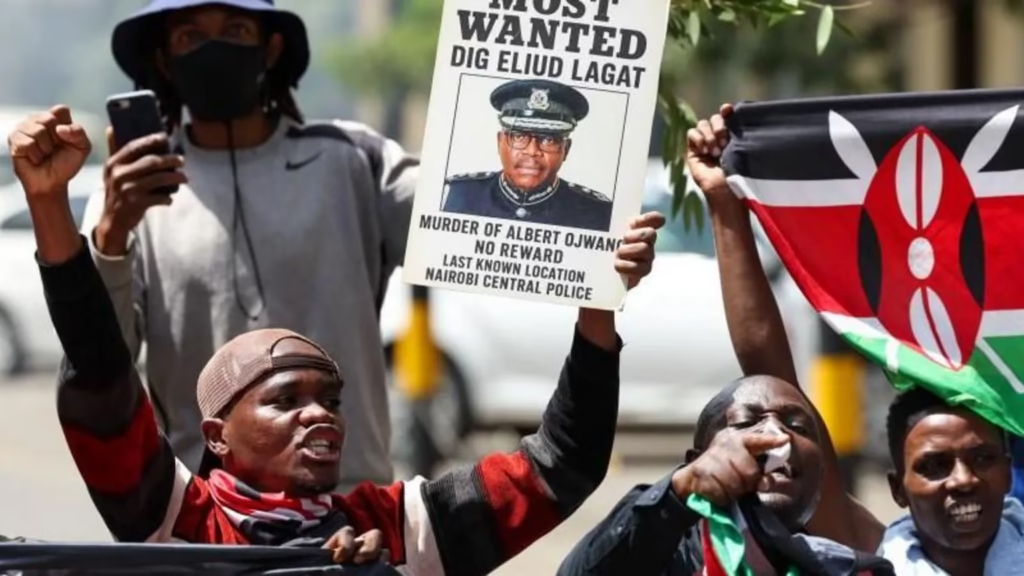

Kenya’s Deputy Inspector General of Police, Eliud Lagat, has stepped aside temporarily as investigations intensify into the death of blogger Albert Ojwang, who died under suspicious circumstances while in police custody. Ojwang, a 35-year-old political blogger, was arrested on June 6 in Kisumu County and transported over 400 kilometers to Nairobi after being accused of defaming Lagat on social media. Two days later, he was found dead inside a holding cell at the Central Police Station.
Initial police reports claimed Ojwang died after “hitting his head against the wall.” However, an independent post-mortem contradicted that account, citing severe head trauma, neck compression, and widespread injuries consistent with a physical assault. Lagat, who was reportedly the original complainant in the case, did not acknowledge this in his Monday statement. Instead, he said he was stepping aside “in view of the ongoing investigations” and pledged to cooperate fully with investigators. The case has sparked national outrage, with days of protests erupting in Nairobi and parts of western Kenya. Demonstrators have clashed with police, leading to injuries and damaged property. Human rights groups and opposition leaders have condemned what they describe as a pattern of impunity and police brutality.

Two senior officers, Central Police Station commander Samson Talam and his deputy James Mukhwana, were arrested last week in connection with the death. Investigators have requested more time to compile evidence. President William Ruto, facing growing public pressure, responded on Friday, saying his government “will protect citizens from rogue police officers.” He called for a thorough and impartial probe, emphasizing that no one is above the law. Ojwang’s death adds to a grim history of police violence in Kenya. Last year, several activists were abducted or killed during mass protests against a controversial finance bill, fueling criticism of Ruto’s leadership and his promises to reform the police and end extrajudicial killings.


