
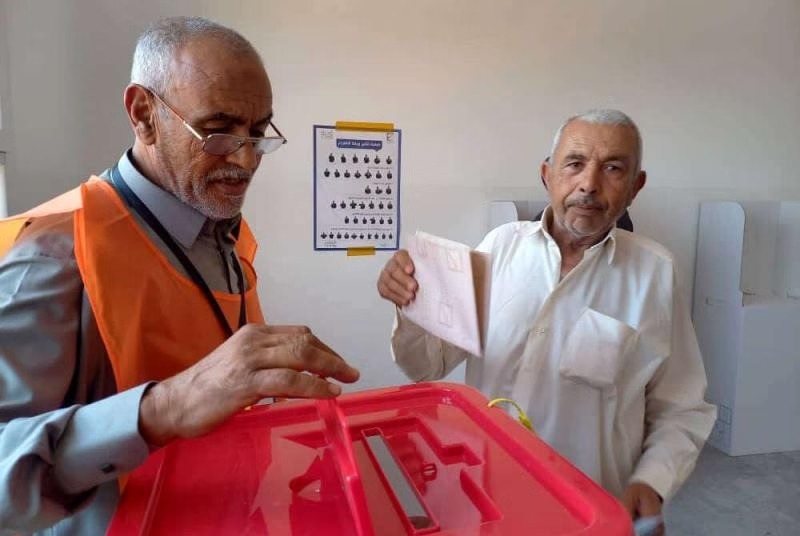

Vote counting is underway in Libya after citizens cast their ballots in 16 municipalities on Saturday, marking the third phase of the country’s municipal elections a process widely viewed as a step toward restoring national stability and preparing for long-delayed presidential and parliamentary polls. According to the High National Elections Commission (HNEC), polling stations closed at 6 p.m. local time with an estimated 68% voter turnout, a strong showing that reflects renewed public engagement despite years of political division. The commission reported that voting proceeded “smoothly and securely” in all participating municipalities.
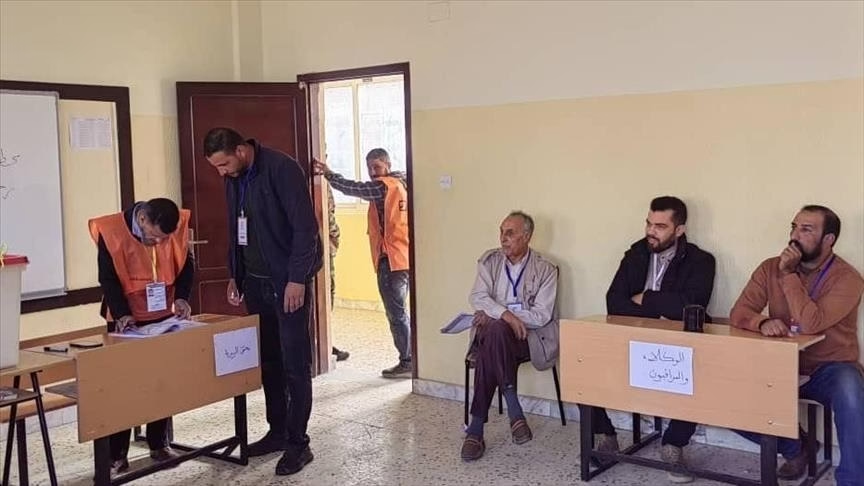
The elections are being conducted in phases, with several councils originally postponed due to security concerns now able to participate. The next round of municipal voting is scheduled for October 20. Libya remains politically split between two rival governments the Government of National Unity (GNU) led by Prime Minister Abdul Hamid Dbeibah in Tripoli, and an eastern based administration backed by General Khalifa Haftar. Despite this divide, Dbeibah welcomed the local polls, calling them proof that Libyans “can practice democracy efficiently,” and expressing confidence that “the same stability that allowed municipal elections will support national ones.”
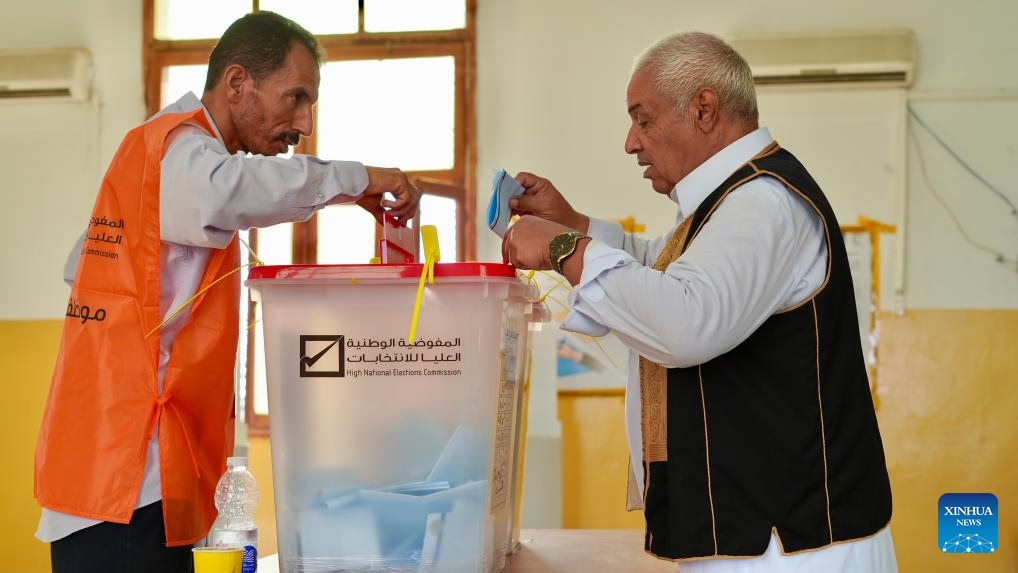
The United Nations Support Mission in Libya (UNSMIL) also praised the conduct of the vote, describing it as “an important step toward restoring the legitimacy of local governance institutions.” Libyans hope that the success of these municipal elections will help revive the country’s stalled national electoral process — a long-standing goal since the collapse of nationwide elections initially planned for December 2021. If sustained, the current momentum could mark a significant move toward ending more than a decade of political fragmentation and transitional rule.


