
Tunisia’s tourism sector is facing growing uncertainty ahead of the peak summer season as the ongoing conflict in the Middle East drives up fuel prices and travel costs, threatening visitor numbers to key destinations such as the island of Djerba. Tourism operators say rising oil prices have sharply increased airfare costs, forcing many travelers to reconsider holiday plans despite Tunisia’s efforts to market itself as a safe and affordable Mediterranean destination. Djerba, one of Tunisia’s most popular tourist islands, has already begun to feel the impact. Anane Kamoun, director of the Royal Garden Palace hotel, said bookings at the resort have dropped by nearly 50 percent compared to last year.
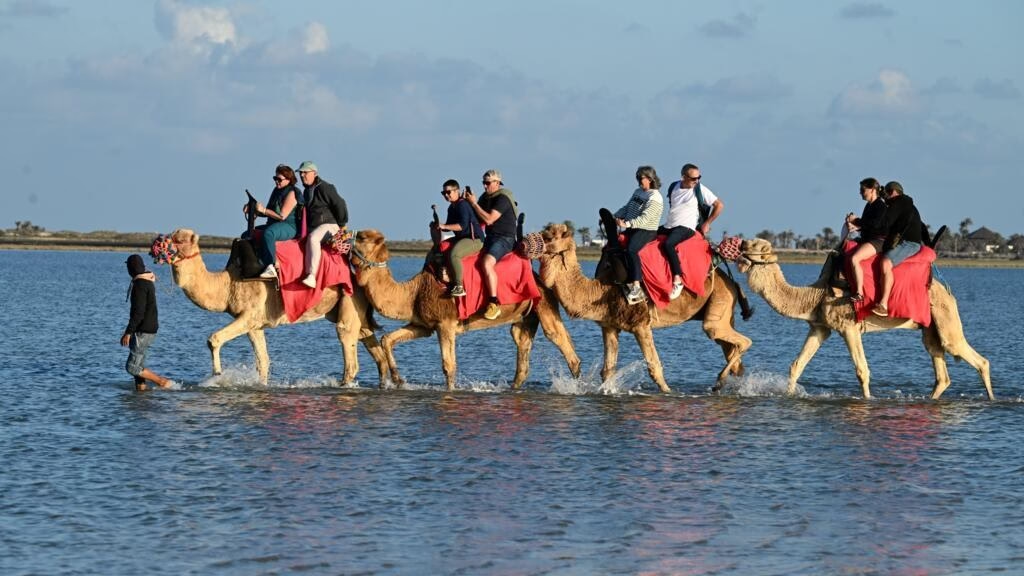
“When oil prices rise, airfares rise, and tourists start reconsidering the cost,” Kamoun said, noting that ticket prices on some routes have increased by as much as 70 to 80 euros. Industry officials say the price of aviation fuel has doubled since the start of the year, pushing airlines to increase fares and, in some cases, cancel less profitable flights. Tourism remains a critical pillar of Tunisia’s economy, contributing around 10 percent of the country’s GDP and providing jobs for roughly 400,000 people. Despite the concerns, tourism authorities remain cautiously optimistic. According to Hichem Mahouachi, regional representative of Tunisia’s national tourism office, Djerba welcomed a record 1.2 million tourists in 2025, surpassing pre-pandemic levels and marking a five percent increase from the previous year.
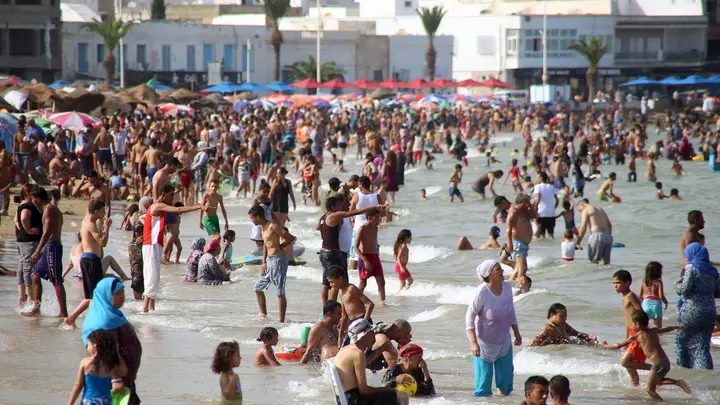
Officials had projected visitor growth of up to eight percent this year before regional tensions disrupted travel trends. Mahouachi pointed to signs of resilience, saying airlines have scheduled about 5,600 flights to Djerba between April and September, a 3.3 percent increase from last year with routes connecting the island to 16 mainly European countries. He added that Tunisia’s proximity to Europe could help cushion the impact of rising fuel costs, as most major European cities are only around two hours away by air. “The increase in kerosene prices will not be felt in the same way as for long-haul travel,” Mahouachi explained. “Tunisia may even benefit from that.” Officials also continue to promote Tunisia as one of the Mediterranean’s safest tourism destinations amid broader regional instability.