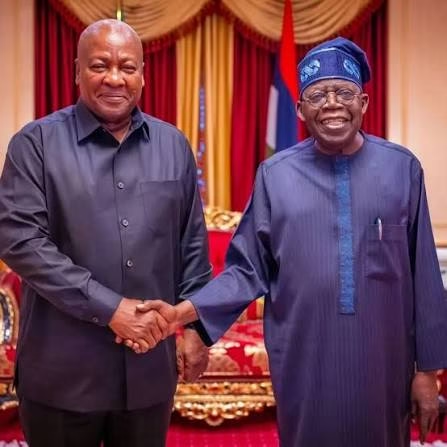

Nigeria and Ghana have jointly condemned what they described as “Afrophobic” protests targeting African migrants in South Africa, calling on the African Union (AU) to urgently address the growing wave of anti-immigrant violence across the continent. In a joint position announced by Nigeria’s Ministry of Foreign Affairs, the two countries said they would push for the issue to be formally discussed at the next African Union Summit. The agreement followed talks between the foreign ministers of Nigeria and Ghana on the sidelines of an ECOWAS meeting over the weekend. The two governments expressed concern that the attacks and intimidation directed at African nationals undermine the principles of African unity, solidarity and free movement of people promoted by both the African Union and ECOWAS.

South Africa, Africa’s most industrialized economy, has for decades attracted migrants from across the continent in search of employment and better economic opportunities. However, the country has also experienced recurring outbreaks of xenophobic violence, often driven by high unemployment, poverty and public frustration over immigration. According to the two governments, tens of thousands of foreign nationals have fled affected communities in recent weeks amid escalating protests and attacks. Nearly 1,500 Nigerians and about 1,000 Ghanaians have been repatriated after anti-immigrant groups reportedly issued a June 30 deadline demanding that undocumented migrants leave South Africa. Nigeria and Ghana urged the African Union to strengthen regional mechanisms for preventing xenophobic violence, including improved monitoring systems, early warning frameworks and preventive diplomacy to address tensions before they escalate.
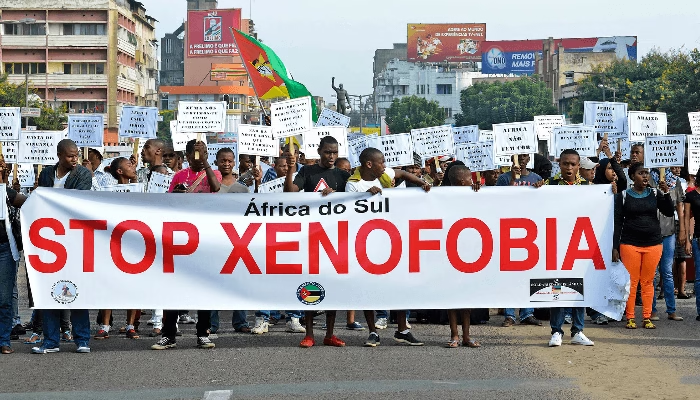
The two countries stressed that attacks on fellow Africans threaten the vision of regional integration under the African Continental Free Trade Area (AfCFTA) and weaken efforts to promote peace, economic cooperation and the free movement of people across the continent. Meanwhile, Nigeria has indicated it will seek compensation from the South African government for properties, businesses and other assets reportedly abandoned by Nigerian nationals forced to leave during the unrest. The latest diplomatic intervention highlights growing regional concern over the safety of African migrants in South Africa and is expected to increase pressure on Pretoria and the African Union to develop a coordinated response to xenophobia and protect the rights of migrants across the continent.