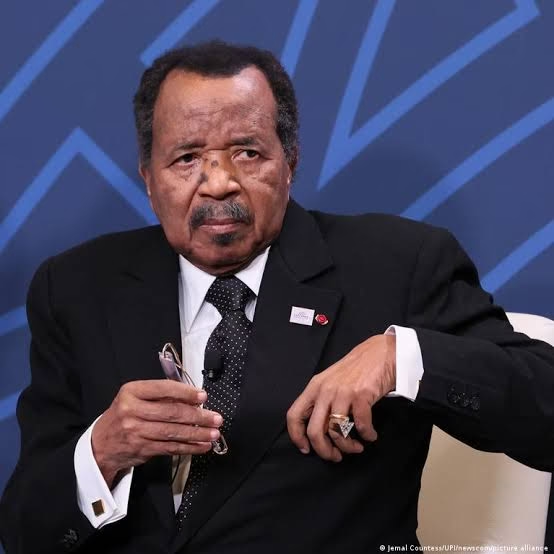

Growing uncertainty surrounds the prolonged absence of Cameroonian President Paul Biya, who has been outside the country for more than six weeks, fueling speculation about his health and raising fresh questions over constitutional succession and the continuity of government. Biya, 93, left Cameroon on June 7 for what officials described as a short private stay in Europe. However, 44 days later, the veteran leader had yet to return, prompting increased scrutiny from opposition figures, legal experts and civil society groups. The president’s prolonged absence has intensified rumors about his health, although the government has not issued any official statement indicating that he is ill or unable to perform his duties. An opposition member of parliament has petitioned Cameroon’s Constitutional Council to declare the presidency vacant, arguing that the extended absence has created uncertainty over the effective exercise of presidential authority.
The ruling Cameroon People’s Democratic Movement (RDPC) has dismissed the calls, insisting that state institutions continue to function normally. In an editorial published on July 15, senior party official Christophe Mien Zok rejected suggestions of a power vacuum, declaring: “The office is not vacant. The Lion has not left,” referring to Biya’s long-standing political nickname. Despite his absence, official presidential social media accounts have continued to publish messages attributed to Biya, including congratulatory notes to French President Emmanuel Macron on France’s National Day and to Montenegro’s president. However, the president has made no public appearance or addressed the nation since leaving the country. The opposition Cameroon Democratic Union (UDC) acknowledged that the Constitution does not automatically consider a prolonged absence as a vacancy but argued that the situation raises legitimate concerns about governance, institutional continuity and the president’s ability to discharge his constitutional responsibilities.
Legal analysts say the Constitution does not specify a maximum period the head of state may remain abroad, creating ambiguity over when, or whether, the Constitutional Council should intervene. Some constitutional experts argue that after an extended absence, the Council has a responsibility to assess whether the presidency can continue to function effectively. The debate is further complicated by the absence of a vice president in Cameroon’s political system, leaving no automatic constitutional mechanism to temporarily assume presidential duties if the head of state becomes unable to govern. Biya, who has ruled Cameroon since 1982, is one of the world’s longest-serving heads of state. His extended absence has once again brought succession planning and institutional stability into focus ahead of the country’s next political transition.