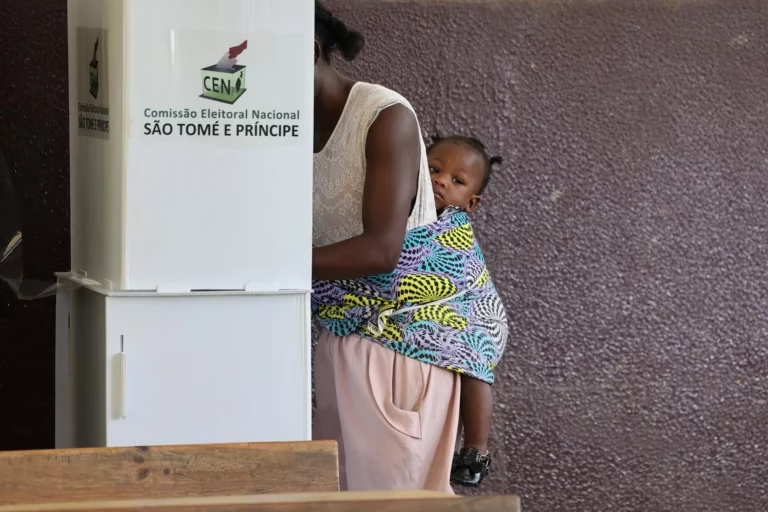

Vote counting was underway in São Tomé and Príncipe on Sunday after citizens cast their ballots in a presidential election that could shape the political future of one of Africa’s most stable democracies. In cumbent President Carlos Vila Nova is seeking another term but faces a strong challenge from fellow Independent Democratic Action (ADI) party member Nito Viegas D’Abreu, a member of parliament backed by former Prime Minister Patrice Trovoada. Two independent candidates are also contesting the race. Under the country’s electoral law, a candidate must secure more than 50 percent of the vote to win outright. If no candidate reaches that threshold, a runoff election is scheduled for August 9.
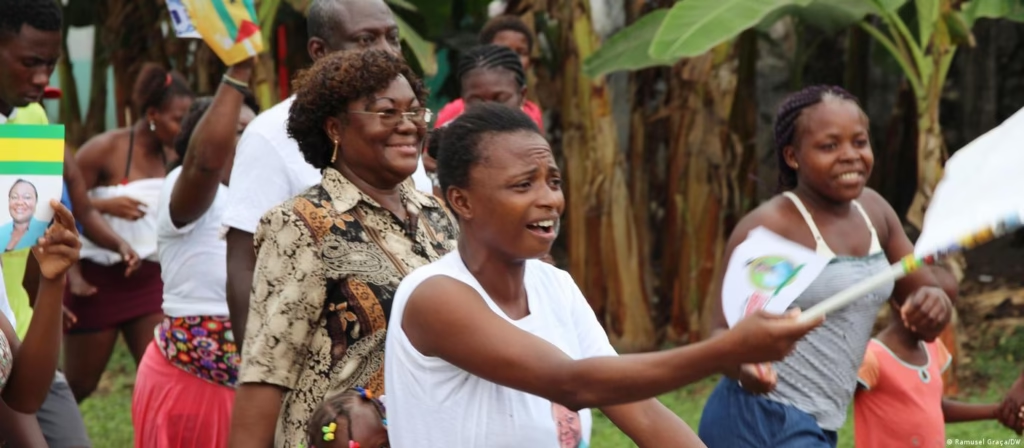
National Electoral Commission President Jeudiger Nascimento expressed concern over low voter participation, noting that many eligible voters visited polling stations but left without casting their ballots. Official turnout figures had not yet been released. The election comes at a politically significant moment for the Gulf of Guinea island nation of about 200,000 people, which has long been regarded as one of Africa’s strongest parliamentary democracies despite a history of attempted coups, including a failed military takeover in 2022. Although the presidency is largely ceremonial, with executive authority resting primarily with the prime minister, the office plays an important role in safeguarding the constitution, representing the country internationally and signing legislation into law.
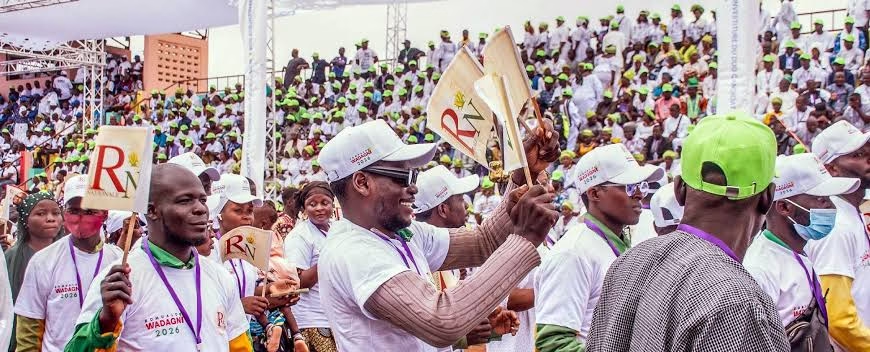
Vila Nova, 66, who won the presidency in 2021 with the support of the ADI party, has campaigned on preserving political stability. However, his administration has faced criticism following his dismissal of former Prime Minister Patrice Trovoada in January 2025, a decision later ruled unconstitutional by the country’s courts. Trovoada, now leading the ADI and preparing for September’s parliamentary elections, has endorsed Viegas D’Abreu, 43, who has positioned himself as the voice of a new generation born after São Tomé and Príncipe gained independence from Portugal in 1975. Economically, São Tomé and Príncipe relies heavily on agriculture, particularly cocoa, coffee, vanilla and pepper exports, while tourism remains a growing source of income. International energy companies, including TotalEnergies, have also obtained exploration licences for offshore oil and gas reserves, raising hopes of future economic growth.
The country maintains close ties with the European Union and Portugal, while expanding relations with China and Russia, including the signing of a military cooperation agreement with Moscow in 2024. Despite its democratic reputation and economic potential, São Tomé and Príncipe remains heavily dependent on foreign aid, with much of its population living below the poverty line. The outcome of the election is expected to influence both domestic governance and investor confidence ahead of parliamentary elections later this year.