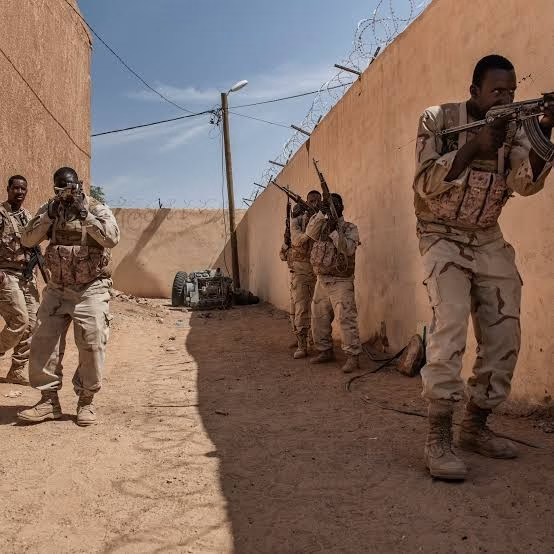

The United Nations has warned that terrorist groups are expanding their operations across West Africa and the Sahel, posing an increasing threat to regional security as they adopt advanced technologies and push into previously stable coastal states. Addressing the UN Security Council, Leonardo Santos Simão, the UN Secretary-General’s Special Representative for West Africa and the Sahel, said extremist groups remain a major security challenge, particularly in the central Sahel and northern Nigeria, while increasingly targeting countries along the Gulf of Guinea.
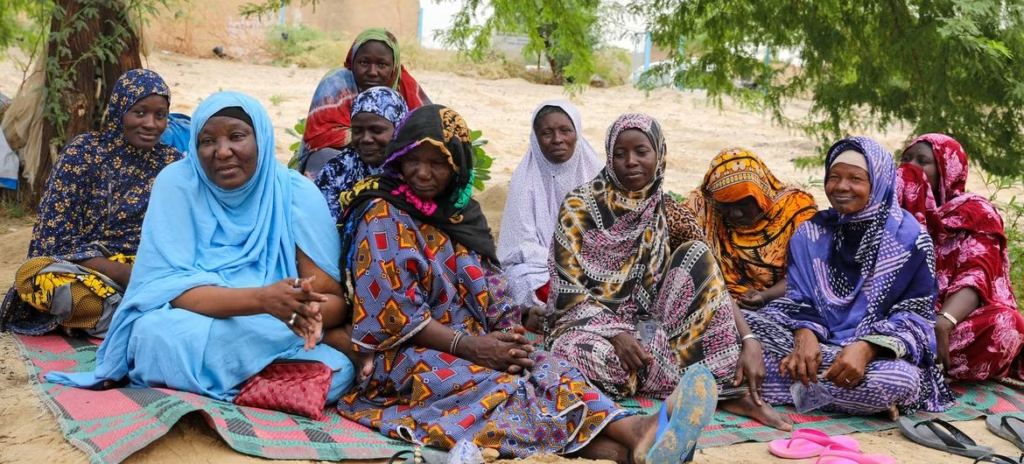
According to Simão, armed groups are becoming more sophisticated by using drones, encrypted communication technologies and cryptocurrencies to coordinate attacks, finance operations and evade security forces. He also warned that terrorism is becoming increasingly linked to transnational organized crime, including drug trafficking, further complicating efforts to restore peace and stability across the region. The UN official said ongoing insecurity has severely restricted humanitarian access in many conflict-affected areas, leaving millions of civilians without adequate assistance. Women, children and young people continue to suffer the most from the violence, with attacks on schools disrupting education and threatening the future of entire communities.
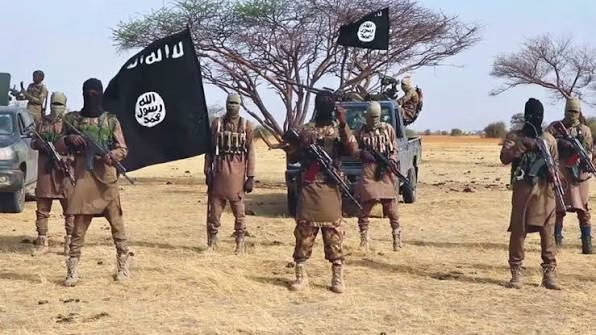
Security Council members also emphasized the need for stronger regional cooperation to address the underlying causes of insecurity, including poverty, weak governance, youth unemployment and the growing impact of climate change. Responding to the concerns, Burkina Faso’s Ambassador to the United Nations reaffirmed the commitment of the Alliance of Sahel States (AES) comprising Burkina Faso, Mali and Niger to restoring peace and strengthening regional cooperation. He said the alliance remains open to dialogue and welcomed mediation efforts by Togo, the African Union and the United Nations Office for West Africa and the Sahel (UNOWAS). The United Nations stressed that defeating terrorism in the region will require sustained international support, increased humanitarian assistance and long-term investment in development, governance and regional security partnerships.