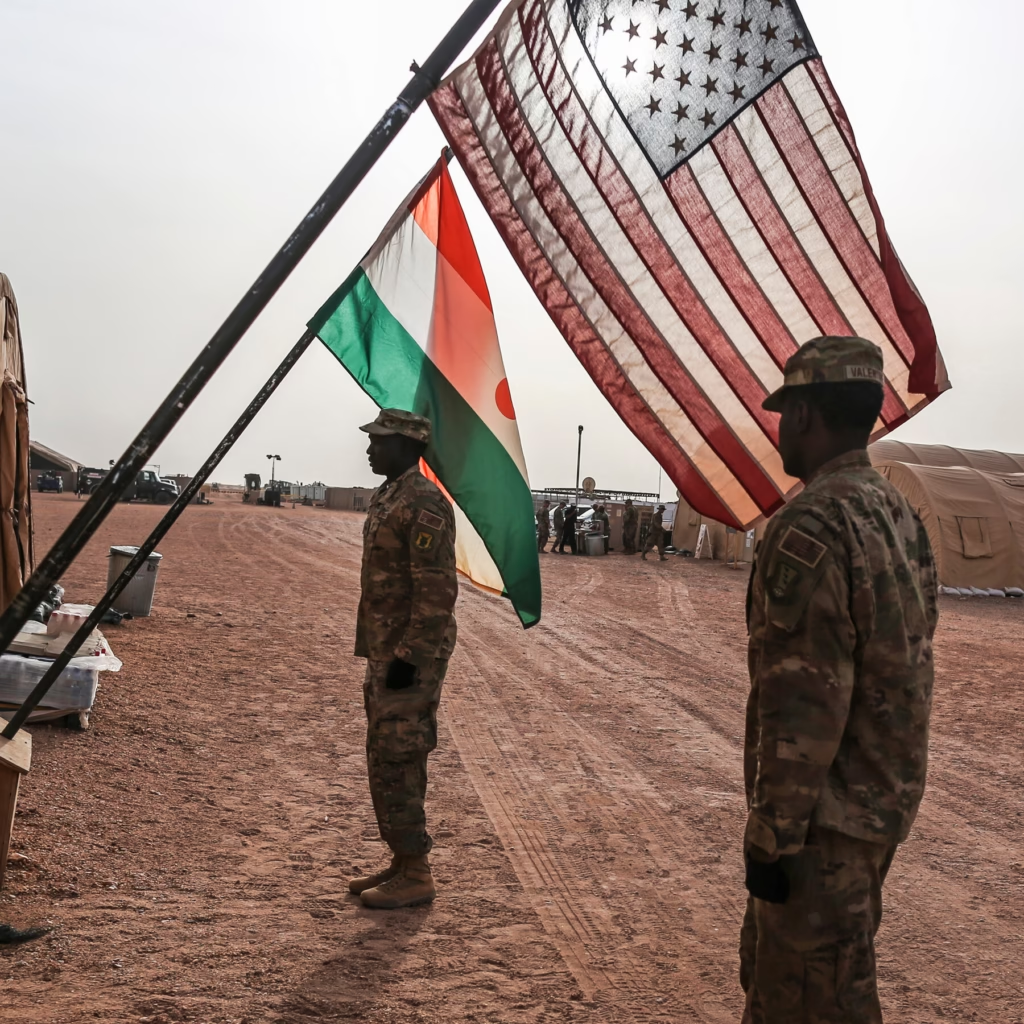

The United States and Niger have signed a five-year, $179.3 million memorandum of understanding aimed at expanding cooperation in public health under Washington’s “America First” global health strategy. In a statement, the United States Department of State said the U.S. will provide up to $107.4 million to help Niger combat malaria, improve maternal and child health services, and strengthen epidemic preparedness and disease surveillance systems. The government of Niger has pledged $71.9 million in domestic funding over the duration of the agreement, underscoring what officials describe as stronger national ownership of critical health program.
The protocol allocates $5 million specifically for global health security and the development of an integrated digital health ecosystem. The plan includes six interconnected platforms: electronic health records, laboratory information management, pharmacy systems, epidemiological surveillance tools, medical supply inventory tracking, and a centralized national health data warehouse. U.S. officials say the agreement is designed to enhance Niger’s ability to detect outbreaks early and respond rapidly, limiting the cross-border spread of infectious diseases in a region vulnerable to epidemics such as malaria and other emerging health threats.
Separately, Washington signed a $60.8 million health cooperation deal with the Dominican Republic focused on HIV/AIDS prevention and implementing the “7-1-7” surveillance model, which aims to identify outbreaks within seven days, notify authorities within one day, and launch a response within seven days. Together, the two agreements represent more than $240 million in joint health investments, reflecting renewed U.S. engagement in global health partnerships.