
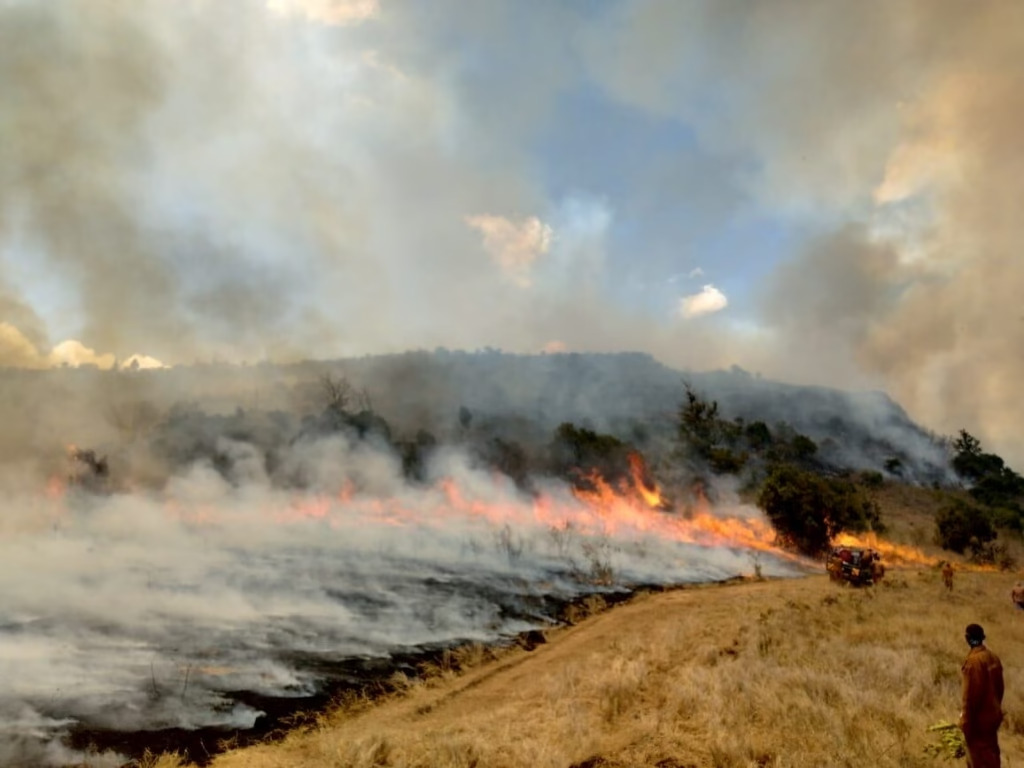

The UK government has agreed to pay £2.9 million in compensation to more than 7,700 Kenyans affected by a devastating fire sparked by a British Army training exercise in 2021. The blaze, traced to a tipped-over camp stove at the Lolldaiga Conservancy in Kenya’s Rift Valley, destroyed about 7,000 acres of private land. Locals reported losing homes, livestock, crops, and suffering health complications from smoke inhalation. Some also claimed stampeding wildlife destroyed property as they fled the flames.
The settlement comes after four years of legal battles led by lawyer Kevin Kubai, who described the deal as the “best possible outcome.” Many claimants, however, said their payouts were far too small to cover their losses. Kubai admitted the lack of medical records and lost evidence would have made prolonging the case possibly another seven years difficult. The British High Commission in Nairobi said the UK “accepts responsibility for the fire,” calling the compensation “fair and generous” after a rigorous assessment. The Ministry of Defence had earlier pledged support for environmental restoration at Lolldaiga, a 49,000 acre wildlife rich plateau in Laikipia that continues to host British military exercises.
Lolldaiga lies in a region still scarred by colonial-era land seizures, where land disputes remain unresolved. It is also close to Lewa Conservancy, where Prince William proposed to Kate Middleton in 2010, underscoring its prominence as both a training ground and a luxury tourism area. The British Army Training Unit Kenya (BATUK), based nearby at the £70m Nyati Barracks, brings tens of millions into Kenya’s economy each year. Yet it remains controversial, with past allegations against soldiers ranging from fatal hit-and-runs to sexual exploitation of local women. The settlement, while closing one chapter, has reignited debate about Britain’s military presence in Kenya and whether accountability for its actions goes far enough.


