Nigeria’s beauty pageant scene is often defined by conventional standards of glamour, but a new competition in Lagos is rewriting the script. The Albinism Advocacy Pageant is putting diversity at the forefront, using the spotlight to challenge long-held prejudices and push for inclusion. Albinism, a genetic condition that affects the skin, hair, and eyes, remains widely misunderstood in Nigeria. Harmful cultural myths and superstitions often fuel discrimination, leaving people with albinism sidelined in schools, workplaces, and even family and community life. In some cases, they face harassment and violence.
On Saturday, Anita Chidiebube-Dike was crowned queen of the pageant. She pledged to use her new role to raise awareness. “My first priority is to create engaging content that shows the strength and positive impact of persons with albinism in our society,” she said after her win. Advocates say this kind of representation is long overdue. Tolani Ojuri, chairperson of the Albinism Association of Nigeria, noted the daily challenges faced by those with the condition.
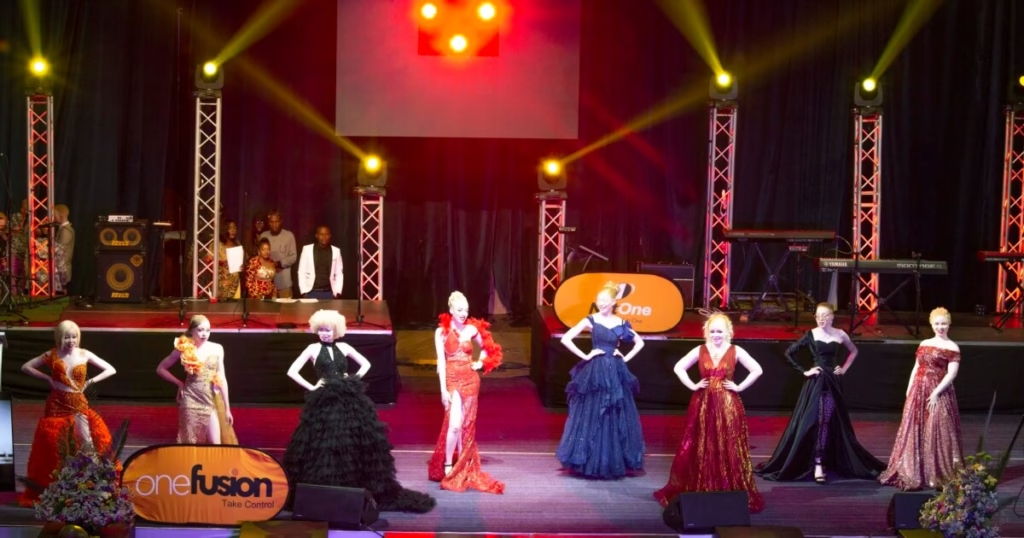
“From sun exposure to vision problems, persons with albinism face unique struggles. But beyond that, they endure myths, bullying, and harmful stereotypes. We need more education and visibility.” Organisers argue that pageantry, often seen as superficial, can be a powerful platform for social change. “When people think of pageantry, they think of beauty fitting a narrow mold,” said organiser Mistura Abisola Owolabi. “We are flipping that narrative by celebrating the talents and voices of people with albinism.”
According to the World Health Organization (WHO), between one in 5,000 and one in 15,000 people in sub-Saharan Africa live with albinism. In Nigeria alone, estimates suggest around 2 million people are affected. While the government has promised stronger protections against discrimination, advocates say progress has been slow. Still, the crowning of an albinism advocacy queen offers hope. For many, it is more than a pageant—it is a signal that representation and acceptance are beginning to grow.