


The United Nations human rights office has expressed deep concern over reports of deadly violence in Tanzania, where election-related protests have turned increasingly violent following a disputed vote that extended President Samia Suluhu Hassan’s rule. According to Seif Magango, spokesperson for the Office of the UN High Commissioner for Human Rights (OHCHR), credible sources indicate that at least 10 people have been killed since demonstrations began on Wednesday, when millions cast their ballots in a highly contentious election. Protests erupted nationwide after opposition parties were barred from fielding their main presidential candidates, a move critics say robbed the vote of legitimacy. Opposition leaders have claimed that as many as 700 people may have been killed in clashes with security forces, an allegation the government has dismissed as “baseless” and described the violence as “isolated incidents.”
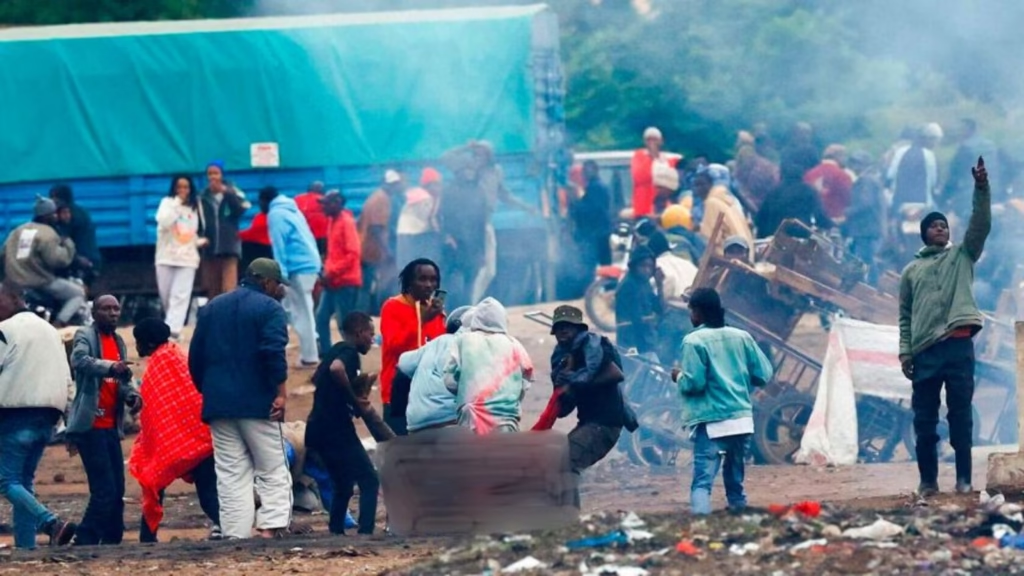
Amnesty International reported that at least 100 people had died, calling for an independent investigation into what it described as a “brutal and disproportionate” response by Tanzanian security forces. Magango urged restraint, saying “We call on security forces to refrain from using unnecessary or disproportionate force, including lethal weapons, against protesters, and to make every effort to de-escalate tensions.” The UN also demanded the immediate release of those arbitrarily detained and pressed authorities to restore internet access, which has been cut since election day. An overnight curfew remains in effect in Dar es Salaam and other major cities.
“Restricting communication will only deepen mistrust in the electoral process,” Magango warned, stressing that Tanzania must uphold its obligations under international human rights law, including the right to peaceful assembly and free expression. The protests come amid a broader climate of political repression, marked by the arrest and intimidation of opposition figures during the campaign period. President Hassan, who assumed office in 2021 following the death of John Magufuli, has denied allegations of widespread abuses and insists the election was free and fair. However, observers from regional blocs and civil society groups have raised concerns over transparency, limited voter access, and the heavy-handed use of state power — signs, they say, that Tanzania’s democratic gains are under threat.


