


The Nigerian government has pushed back strongly against the Trump administration’s announcement of possible military action and its decision to label Nigeria a “country of particular concern” for religious freedom violations. In a statement from Washington, U.S. President Donald Trump claimed that “Christianity is facing an existential threat in Nigeria,” directing the Pentagon to prepare military options and warning that all U.S. aid could be halted. Responding from Abuja, President Bola Tinubu dismissed the claims as inaccurate, saying they “do not reflect the national reality.” He stressed that religious tolerance remains a core value of Nigeria’s diverse population.
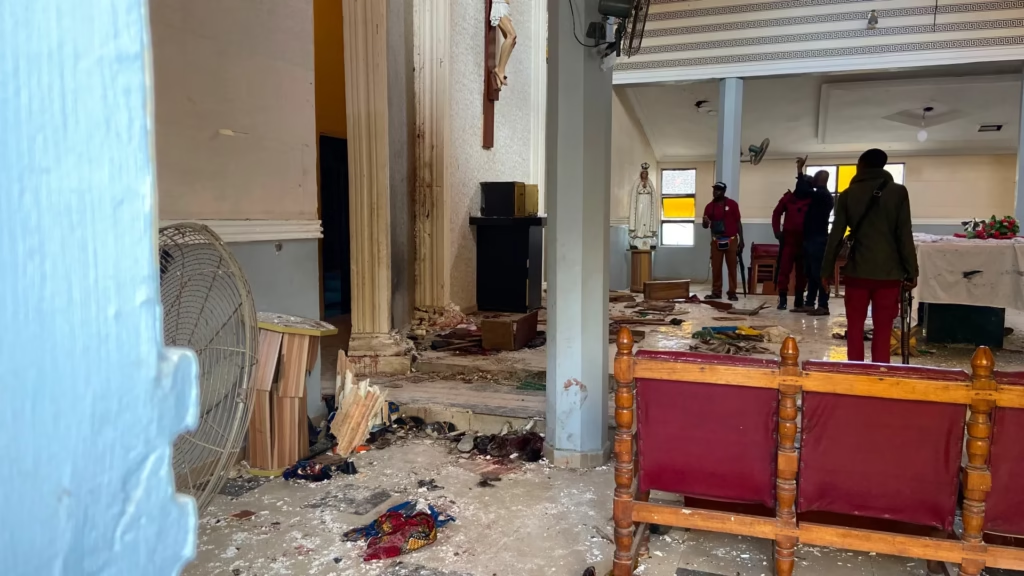
This marks a renewed diplomatic tension between the two countries. The U.S. had first placed Nigeria on its religious freedom watchlist in 2020, later removing it in 2023 under a different administration. Nigeria’s security challenges are complex — involving Boko Haram insurgents, banditry, farmer-herder conflicts, and separatist movements. Although attacks on Christian communities have been widely reported, analysts note that many Muslim civilians in the north have also been victims of violence, making the crisis more about insecurity than religion.
The U.S. move has sparked mixed reactions across Nigeria. Critics have labeled it foreign interference, while others believe it could push the government toward greater accountability and international cooperation. “If it leads to better security, then we welcome it,” said journalist Cyril Abaku, urging both nations to collaborate rather than clash. With over 220 million citizens split almost evenly between Christians and Muslims, Nigeria’s fragile balance of faith and politics continues to shape its national discourse and its tense relations with Washington.


