


A major human smuggling trial began Monday in the Netherlands against Tewelde Goitom, also known as Amanuel Walid, an Eritrean man accused of operating a vast trafficking network that moved thousands of East African migrants to Europe under inhumane conditions. Prosecutors allege that Goitom oversaw a criminal network that detained migrants in camps in Libya, torturing and extorting their relatives for ransom payments before sending victims on perilous journeys across the Mediterranean Sea. Wearing jeans and a blue puffer jacket, Goitom told the Dutch court that he is the victim of mistaken identity, insisting, “I am still the one I said I was earlier,” while speaking through an interpreter. Goitom was extradited from Ethiopia in 2022, where he had been convicted of similar crimes. His current trial is described by Dutch prosecutors as one of the largest human smuggling cases ever prosecuted in the Netherlands. The proceedings are expected to run for three weeks.
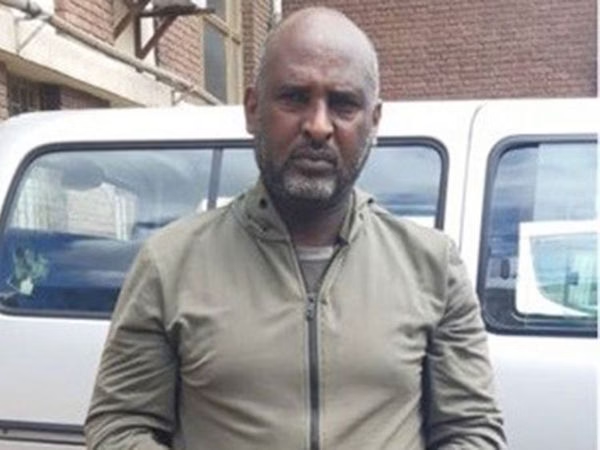
The case has been linked to another notorious trafficker, Kidane Zekarias Habtemariam, who escaped custody during his trial in Ethiopia in 2020. He was later arrested in the United Arab Emirates and is awaiting extradition to the Netherlands. Prosecutors want to combine both cases, while Goitom’s defense team argues that Habtemariam’s testimony could prove his client’s innocence. Dutch authorities claim jurisdiction because parts of the smuggling network allegedly operated within the Netherlands, where families of migrants were extorted to secure the release of their loved ones. Human rights groups, including VluchtelingenWerk Nederland, say the case highlights the desperation driving many Eritreans to flee their country’s repressive regime. Eritrea’s mandatory national service, criticized by the U.N. as involving forced labor, torture, and sexual abuse, has pushed thousands to seek asylum abroad. The Dutch statistics office estimates that around 28,000 people of Eritrean descent now live in the Netherlands. Eritrea, led by President Isaias Afwerki since independence from Ethiopia in 1993, remains one of Africa’s most authoritarian states, having never held national elections.


