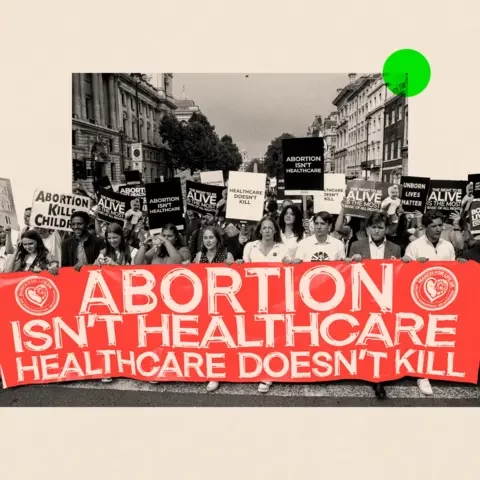

The Trump administration’s expanded restrictions on U.S. foreign aid for organizations linked to abortion services are fueling concerns among health experts and reproductive rights advocates, who warn the policy could worsen maternal health outcomes across Africa. Speaking at the annual March for Life rally in Washington, U.S. Vice President JD Vance announced that the administration would block federal funding for international non-governmental organizations that perform or promote abortion, while also targeting groups involved in gender-affirming care and diversity initiatives. The move significantly broadens previous U.S. policies restricting overseas abortion-related funding. For decades, American anti-abortion organizations have campaigned against abortion both within the United States and internationally. Following the Supreme Court’s reversal of Roe v. Wade, the Trump administration has intensified efforts to promote conservative family values abroad through changes to U.S. foreign aid policies.
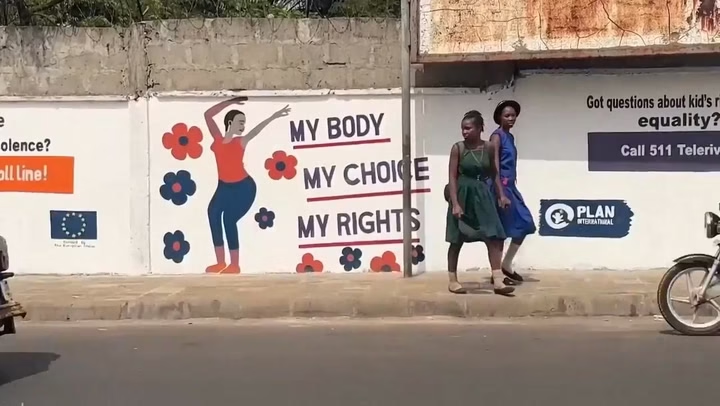
Health experts estimate that the new restrictions could affect at least $30 billion in U.S. foreign assistance, potentially reshaping healthcare programs worldwide. Africa is expected to be among the hardest-hit regions because many countries rely heavily on foreign-funded health services. The continent already records the world’s highest rates of unsafe abortions and maternal mortality. According to an analysis of tax filings from 17 U.S.-based nonprofits, spending by American anti-abortion groups in Africa increased by 50% between 2019 and 2022, exceeding $16 million. Additional analysis by the Institute for Journalism and Social Change found these organizations invested nearly $9.4 million across Africa in 2023 and 2024 alone.
Claire Provost of the Institute for Journalism and Social Change said the figures reveal a growing financial commitment by U.S. conservative groups to influence reproductive rights debates across the continent. Kenya illustrates the challenges facing many African nations. Although the country’s 2010 Constitution allows abortion when a woman’s life or health is at risk, and court rulings have expanded access in cases of rape, incest and serious mental health risks, colonial-era laws still criminalize many abortion-related services, creating legal uncertainty for both patients and healthcare providers. The consequences are often fatal. Health officials estimate that seven women die every day in Kenya from complications related to unsafe abortions.
In the rural village of Karabok, 25-year-old Mary Olouch died after suffering severe bleeding following an unsafe abortion. Unable to qualify for treatment at a public hospital and unable to afford private healthcare, she became another victim of limited access to safe reproductive services. Community health volunteer Loice Ochieng said Olouch’s death prompted more women in the village to seek information about family planning and reproductive health, breaking long-standing taboos surrounding abortion. Public health advocates warn that further reductions in international funding could make access to reproductive healthcare even more difficult for vulnerable women across Africa, increasing the risk of preventable maternal deaths.