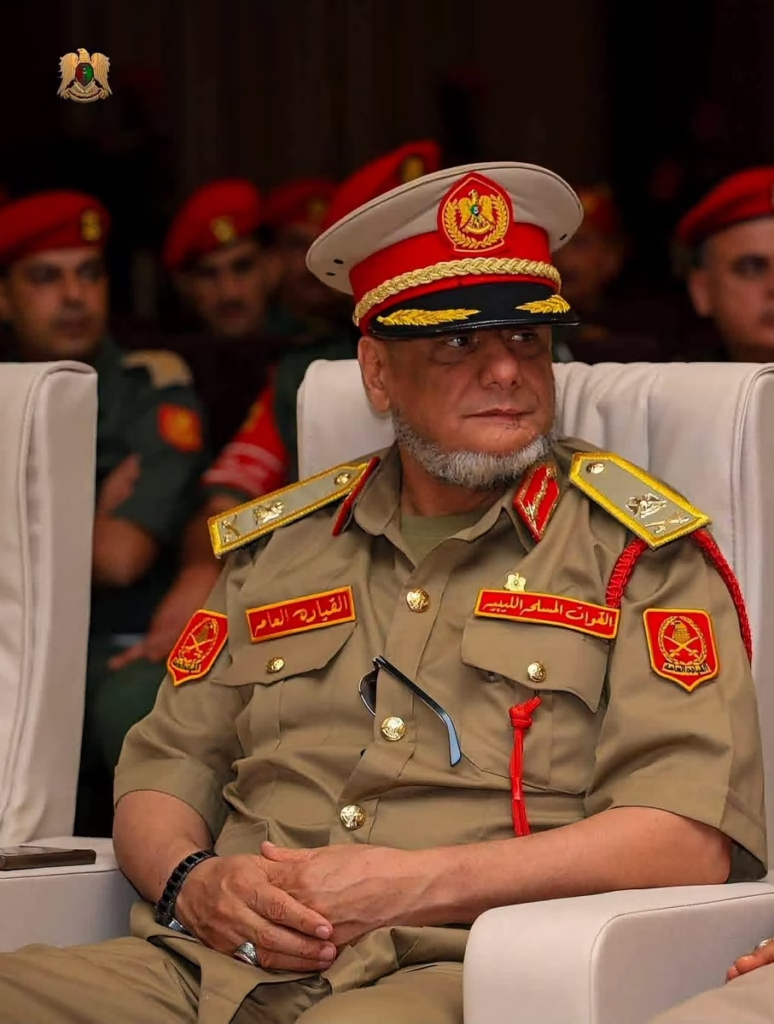

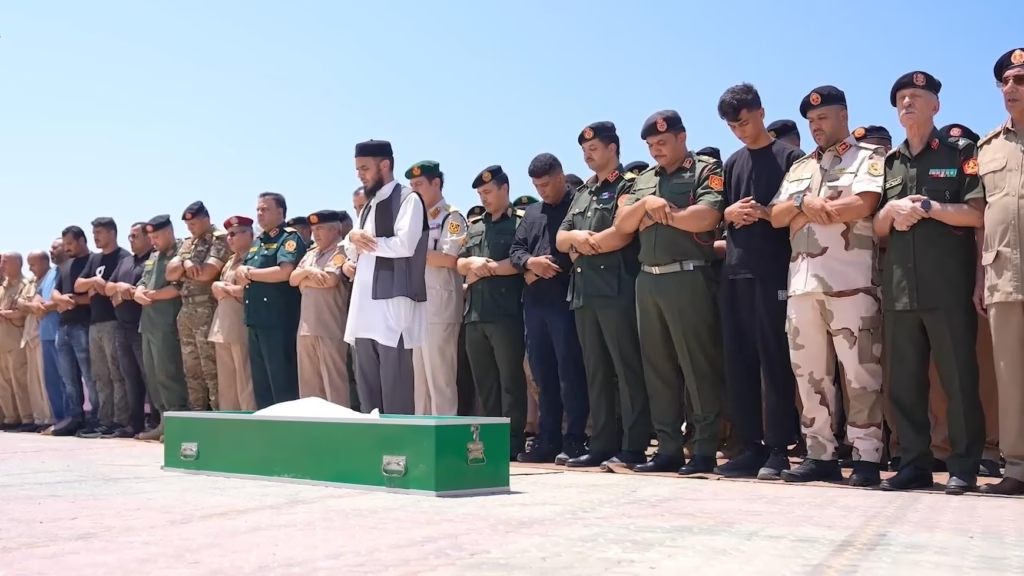
Senior commanders of Libya’s eastern-based Libyan National Army (LNA) gathered in Benghazi on Tuesday for the funeral of Major General Fawzi al-Mansouri, the force’s military intelligence chief, who was killed in a car bombing a day earlier. Al-Mansouri was killed when an explosive attached to his vehicle detonated as he left a mosque in Benghazi on Monday. No group has claimed responsibility, and authorities have not publicly identified suspects. LNA commander Khalifa Haftar’s sons, Khaled and Saddam Haftar, attended the funeral alongside senior military officers and armed personnel. The LNA described al-Mansouri as a “heroic martyr” and vowed to continue its campaign against terrorism.
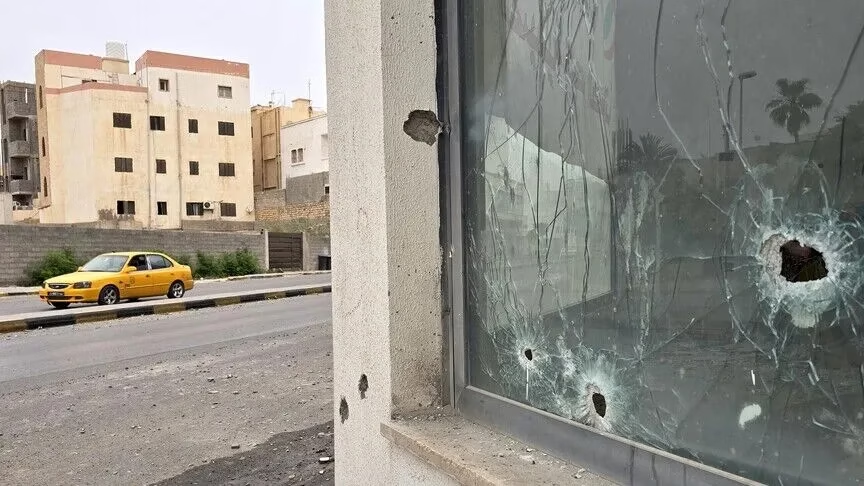
Al-Mansouri was a prominent figure in the eastern military establishment and had been involved in campaigns against jihadist groups, including Islamic State militants, during the fighting that engulfed eastern Libya after 2014. He also served during Haftar’s 2019 offensive to seize Tripoli, which was ultimately halted by forces aligned with the internationally recognized government and supported by Turkey. The assassination has raised questions about security in Benghazi, where Haftar’s forces have sought to portray the east as more stable after years of conflict. Analysts say the ability to target a senior intelligence official highlights continuing security vulnerabilities.
Libya has remained politically divided since the 2011 uprising that ended Muammar Gaddafi’s rule. A UN-backed administration based in Tripoli competes for influence with authorities in the east supported by Haftar and his forces. The split has repeatedly stalled efforts to hold nationwide elections and reunify state institutions. The killing comes as international efforts continue to push Libya’s rival authorities toward political and institutional unification. Libya is also facing renewed security and economic pressures, including recent violence around key energy infrastructure in the west. The assassination of al-Mansouri therefore presents a fresh challenge for Haftar’s eastern administration and could further complicate attempts to restore political stability in a country that has remained divided for more than a decade.