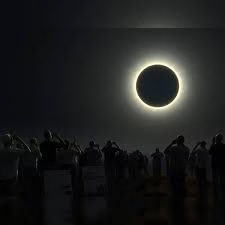

Crowds gathered along the coast of Tenes on Wednesday to witness a rare solar eclipse that covered almost the entire face of the Sun across parts of northern Algeria. The August 12 eclipse was partial in Algeria, but the Moon blocked more than 98% of the Sun in some northern areas, creating a dramatic crescent-shaped Sun shortly before sunset. Algeria’s astronomy authorities said the event was visible across most of the country, with the level of coverage exceeding 90% in many regions and reaching about 98.6% in some locations. In Tenes, residents gathered at the beach with certified solar-viewing glasses as the sky gradually darkened. Although the eclipse came close to totality in parts of the country, totality was not visible from Algeria; the path of totality passed through Greenland, Iceland and parts of Spain.
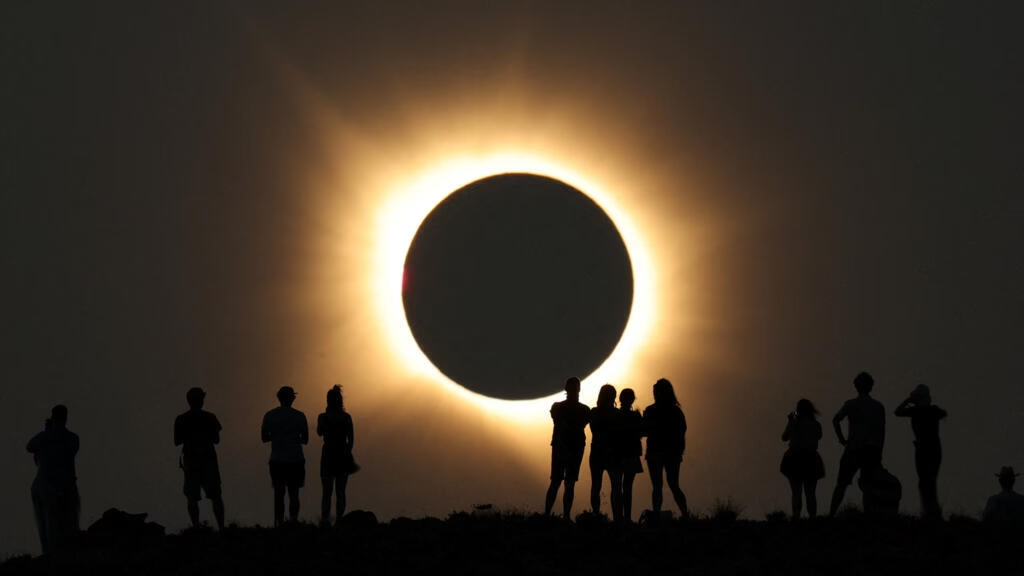
Astronomy groups and authorities also organised public viewing activities. In Zeralda, near Algiers, the Ministry of Youth provided equipment for more than 2,000 children, including members of astronomy clubs, as part of efforts to encourage interest in science and technology. The spectacle was especially striking because the eclipse occurred close to sunset. In Algiers, for example, maximum coverage occurred at about 7:33 p.m. local time, with roughly 96% of the Sun obscured. For Algerians, the event was also a preview of an even rarer spectacle. On August 2, 2027, a total solar eclipse will cross parts of Algeria and several other North African countries. NASA estimates that the 2027 eclipse will reach a maximum totality of about 6 minutes and 23 seconds, making it one of the longest total solar eclipses of the 21st century.