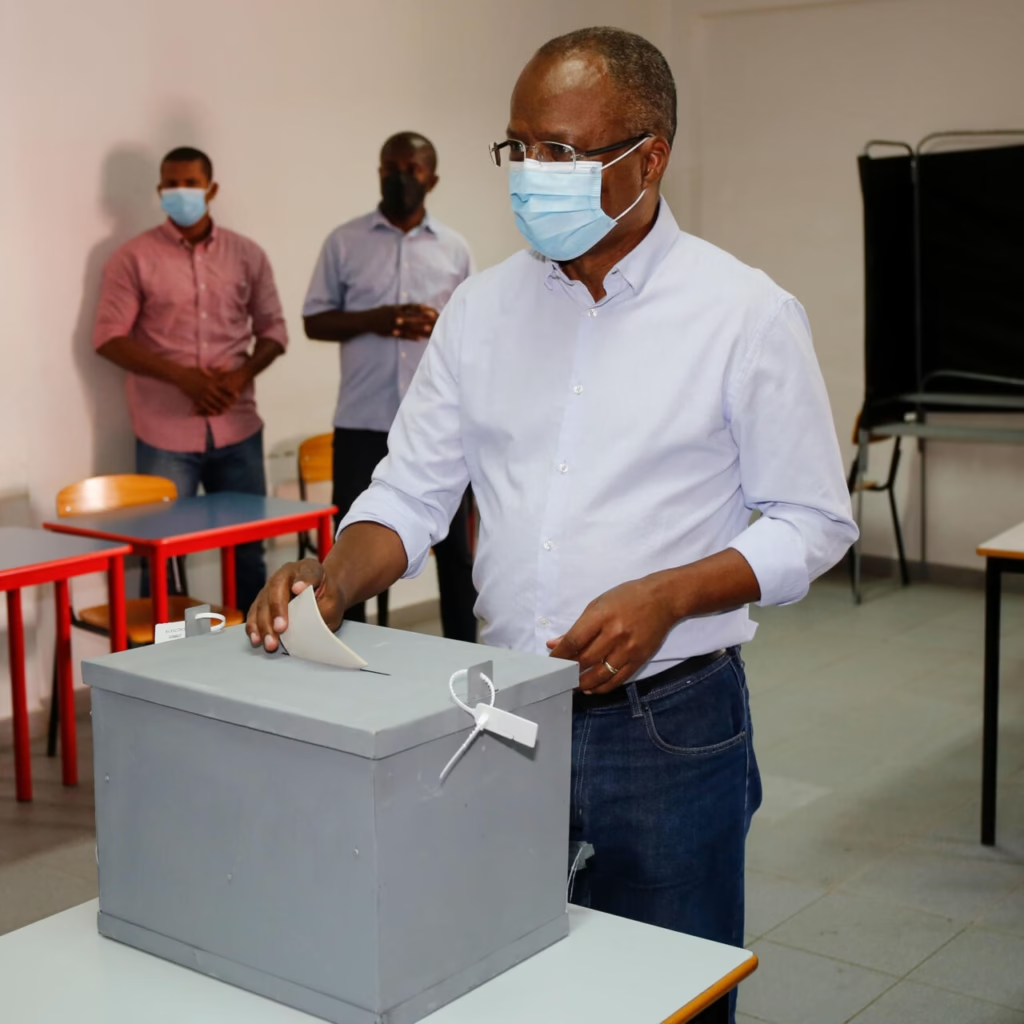

Cape Verde is heading for a major political transition after the opposition African Party for the Independence of Cape Verde (PAICV) won the country’s parliamentary elections, according to provisional results released after Sunday’s vote. With nearly 98 percent of polling stations counted, the PAICV secured about 46 percent of the vote, positioning party leader Francisco Carvalho to become the country’s next prime minister. Carvalho, who currently serves as mayor of the capital city Praia, is expected to replace outgoing Prime Minister Ulisses Correia e Silva, whose government has been in power for the past decade. Preliminary results show the PAICV has won 33 of the 72 seats in the National Assembly and could still secure an outright majority once the remaining seats, including those representing the diaspora, are allocated.

Correia e Silva has already conceded defeat and congratulated Carvalho, signaling a smooth democratic transfer of power in the island nation. Cape Verde, an archipelago off the West African coast with a population of around 550,000 people, is widely regarded as one of Africa’s most stable democracies, known for peaceful elections and strong political institutions. The parliamentary election is part of a broader electoral cycle that will conclude in November with presidential elections, which are expected to shape the country’s political direction for the coming years. Analysts say the new administration will face key challenges including youth unemployment, economic diversification, climate resilience and strengthening tourism, a sector that remains central to Cape Verde’s economy.