
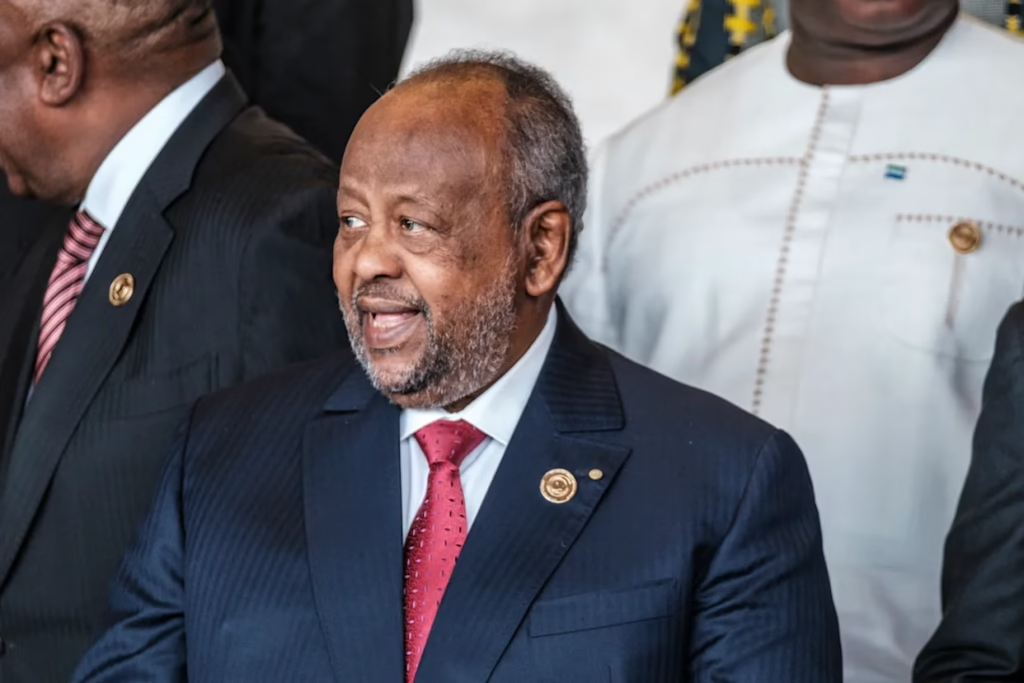

Djibouti’s parliament voted unanimously on Sunday to abolish the presidential age limit, paving the way for 77-year-old President Ismail Omar Guelleh to seek re-election in 2026 and potentially extend his 26-year rule. Until now, Djibouti’s constitution barred anyone over 75 from contesting the presidency. The amendment approved by all 65 members of parliament removes that restriction entirely. It must still be ratified by Guelleh himself and then confirmed by another parliamentary vote in early November before becoming law. The move virtually guarantees Guelleh, one of Africa’s longest-serving leaders, the option to run for a sixth term when elections are held in April 2026.
Guelleh first came to power in 1999, succeeding his uncle, Hassan Gouled Aptidon, and has since maintained tight control over the country’s political system. Under his leadership, Djibouti has become a key strategic hub in the Horn of Africa, hosting several foreign military bases from the United States, France, China, and Japan due to its location along one of the world’s busiest shipping routes the Bab el-Mandeb Strait. Critics, however, describe Djibouti as an authoritarian state where opposition parties face intimidation and media freedom is severely limited. Sunday’s constitutional change sparked debate on social media, though public dissent remains muted due to government restrictions on free expression.
Guelleh last won re-election in 2021 with more than 97% of the vote, in a race boycotted by most of the opposition. His government argues that the amendment is part of broader constitutional reforms to “modernize governance,” while opponents see it as another step toward indefinite rule. If confirmed, the constitutional change would effectively eliminate one of the few remaining checks on executive power in the small but strategically vital East African nation.


