

Mali has shut down all schools and universities for two weeks amid a severe fuel shortage triggered by a blockade imposed by jihadist militants, the government announced Sunday. Education Minister Amadou Sy Savane said in a televised statement that classes would be suspended until November 10 due to “disruptions in fuel supplies affecting the movement of teachers and students.” The closure comes as the country grapples with worsening economic and security conditions following a militant-imposed ban on fuel imports.
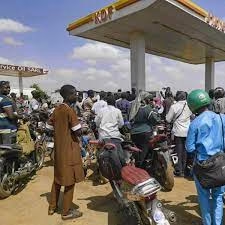
The crisis began in early September when the al-Qaida-affiliated Jama’at Nusrat al-Islam wal-Muslimin (JNIM) declared a blockade on fuel entering Mali from neighboring countries. The move has left hundreds of fuel trucks stranded at border crossings with Côte d’Ivoire and Senegal, severely restricting supply to the capital, Bamako. Long queues have since formed at petrol stations, public transport has nearly ground to a halt, and prices of food and essential goods have surged. The shortage has disrupted daily life and business operations across the country, further straining the already fragile economy.
Security analysts say the blockade is part of a broader jihadist strategy to exert economic pressure on the military junta, which seized power in a 2020 coup. The junta, led by Colonel Assimi Goïta, expelled French and UN peacekeeping forces and turned to Russia’s Wagner Group for security assistance, a move that has yet to yield significant improvement in fighting extremist groups. The Malian army has attempted to escort some fuel convoys from border areas to Bamako, but several trucks have been ambushed along the route, underscoring the militants’ control over vast rural areas. Minister Savane said authorities are working “around the clock” to restore fuel supply and ensure schools can reopen on schedule. However, with the blockade still in place and security deteriorating in several regions, it remains unclear whether normalcy will return anytime soon.


