
Five people who recovered from Ebola have been discharged from treatment in Béni, eastern Democratic Republic of Congo, offering a rare moment of hope as the country battles its fastest-growing Ebola outbreak on record. The survivors, including a healthcare worker, were treated at an Ebola treatment centre operated by Doctors Without Borders (MSF) and at Béni Hospital. They were presented with certificates confirming their recovery and thanked medical teams for helping them survive the disease. The survivors also urged people experiencing symptoms to seek medical attention early rather than delay treatment.
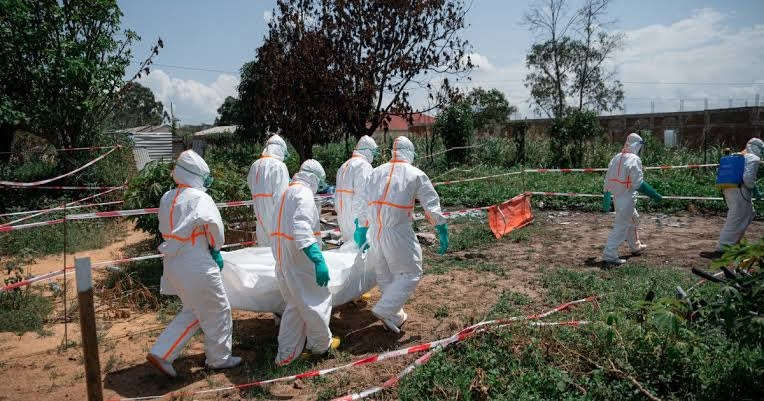
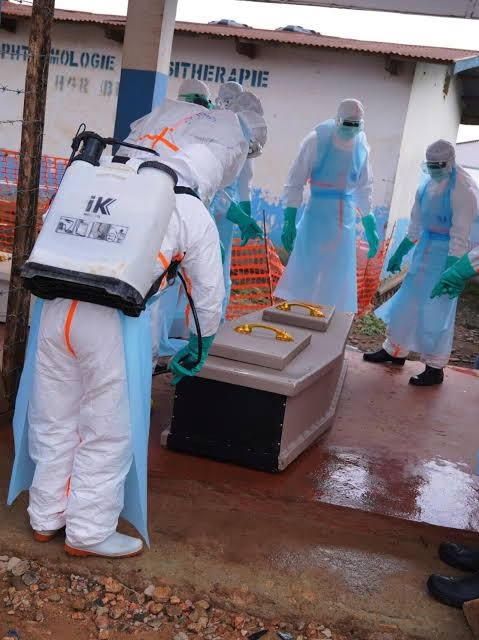
Health officials and Ebola response workers welcomed the discharge. Pierre Akilimali, who leads the national response, described the occasion as a significant moment and a source of pride for teams working on the front lines. But the celebration comes as the outbreak continues to spread. Authorities said 6,041 people had been infected by August 31, with 2,911 deaths and more than 1,360 recoveries. The outbreak, caused by the Bundibugyo strain of Ebola virus, has spread across six provinces and nearly 60 health zones. Response efforts have been hampered by insecurity, population displacement, movement between communities and strikes by healthcare workers. Displacement camps are among the most vulnerable areas, where overcrowding and limited access to healthcare and basic services make it harder to detect and contain infections.
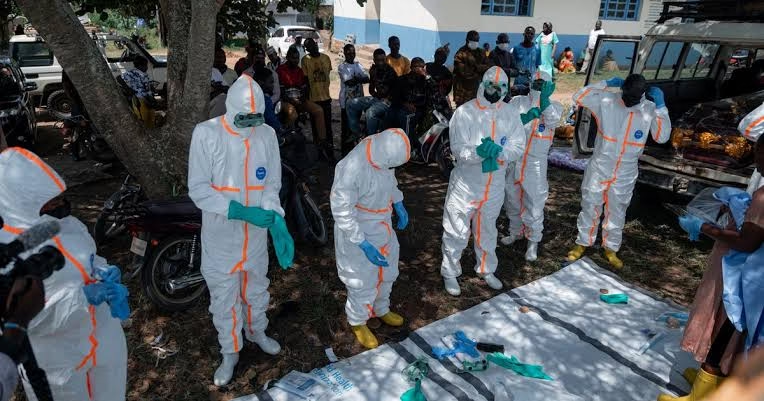
The World Health Organization has warned that the outbreak could eventually surpass the scale of the 2014–2016 West Africa Ebola epidemic, which killed more than 11,000 people, mainly in Guinea, Liberia and Sierra Leone. Although the DRC outbreak was officially declared in May, health authorities believe the virus had already been circulating since February. Its rapid expansion has made containment increasingly difficult, with many new infections occurring outside the network of known contacts. Despite the worsening figures, health officials say the growing number of survivors remains an important sign that timely treatment and continued investment in the response can save lives.