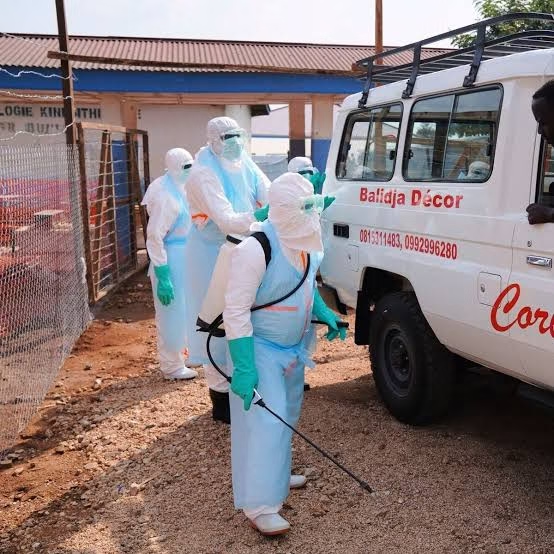

The Ebola outbreak in the Democratic Republic of Congo has spread to a sixth province, raising fresh concerns about the ability of health authorities to contain the rapidly expanding epidemic. Health officials said a motorcycle-taxi driver who had travelled from neighboring Haut-Uele province died in Buta, the capital of previously unaffected Bas-Uele. Tests conducted after his death confirmed infection with Bundibugyo virus, a rare strain of Ebola. The case has raised concerns about possible exposure among people who came into contact with the man’s body. The latest figures from Congolese authorities show about 4,665 confirmed cases and 2,184 deaths, making the outbreak the fastest-growing Ebola epidemic recorded in the country. Most infections and deaths remain concentrated in Ituri province, which accounts for roughly 90% of cases and 80% of deaths.
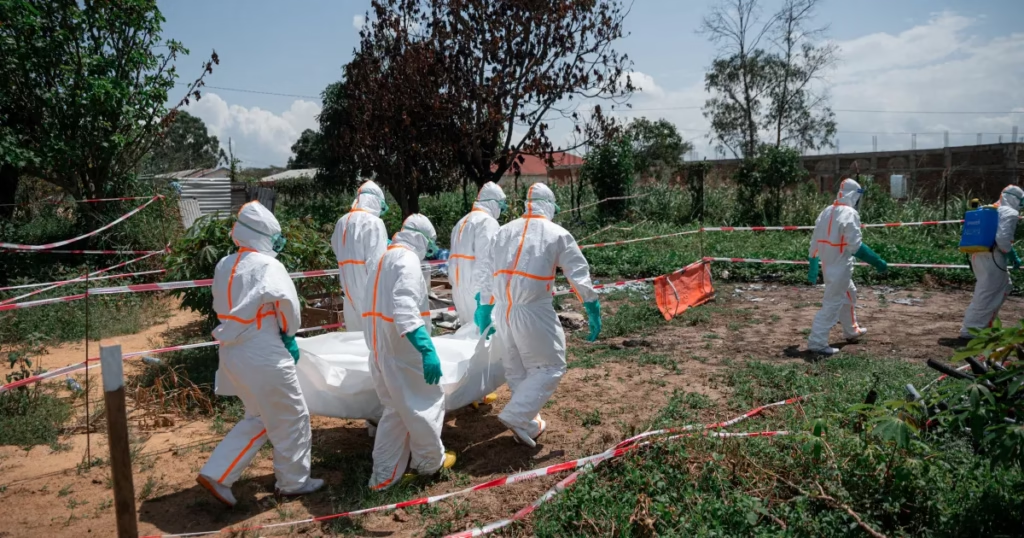
The outbreak was officially declared on 15 May, but genetic and epidemiological investigations indicate transmission began several months earlier. The World Health Organization has classified the situation as a Public Health Emergency of International Concern, while warning that the response is being hampered by insecurity, population movement and limited healthcare capacity. Bas-Uele presents particular challenges. The vast northeastern province borders the Central African Republic and has poor road networks, limited communications and significant population movement linked to gold mining and displacement. These conditions can make surveillance, testing and treatment difficult.
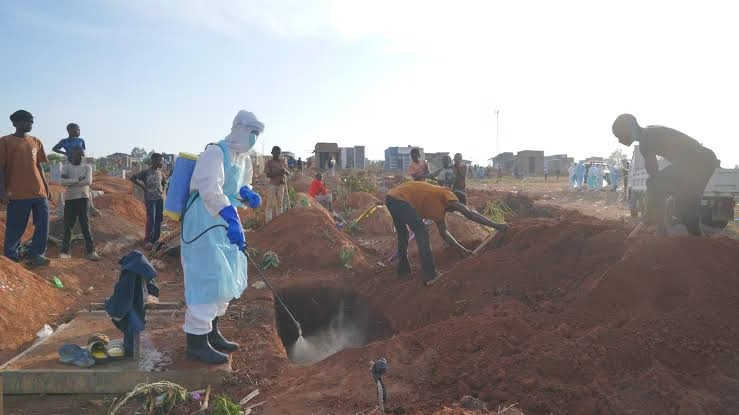
The response is also facing pressure from misinformation and strained health services. WHO reports have highlighted resistance to safe burial procedures and false claims questioning the existence or seriousness of Ebola, complicating efforts to trace contacts and encourage people to seek medical care. There are currently no approved vaccines or specific treatments for Bundibugyo virus, although clinical trials of potential treatments and vaccines are underway. Uganda has also reported cases linked to the outbreak, underscoring the risk of further cross-border transmission. With the virus now detected in six provinces, health authorities face an increasingly urgent race to identify transmission chains, protect frontline workers and prevent the outbreak from spreading further.