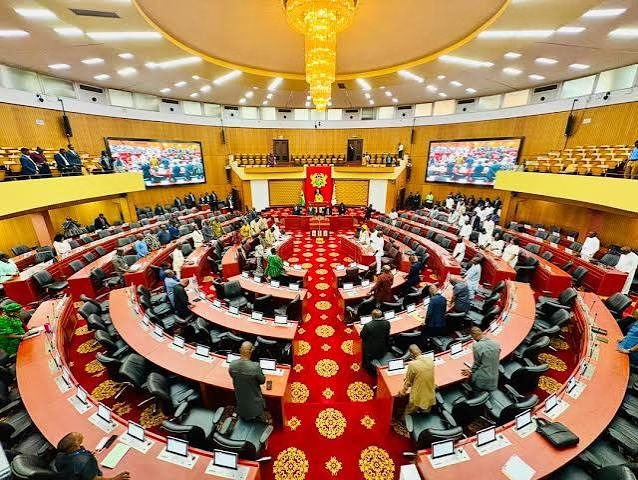

Ghana’s Parliament has passed a landmark bill aimed at protecting the country’s cocoa industry by criminalizing the unauthorized conversion of cocoa farms to other land uses, with offenders facing prison terms of up to 20 years if the legislation is signed into law. The bill, approved on Thursday, seeks to designate all cocoa farms as protected agricultural land, making it illegal to convert them for purposes such as residential development, commercial projects, or other agricultural activities without prior government approval. The contents of the legislation became public on Sunday, while President John Dramani Mahama is yet to give presidential assent. The proposed law forms part of broader efforts to safeguard Ghana’s cocoa sector, which remains one of the country’s most important export industries and a major source of livelihoods for hundreds of thousands of farming households. However, the legislation has sparked concern among cocoa farmers, who argue that it places significant restrictions on landowners without offering adequate financial or technical support.
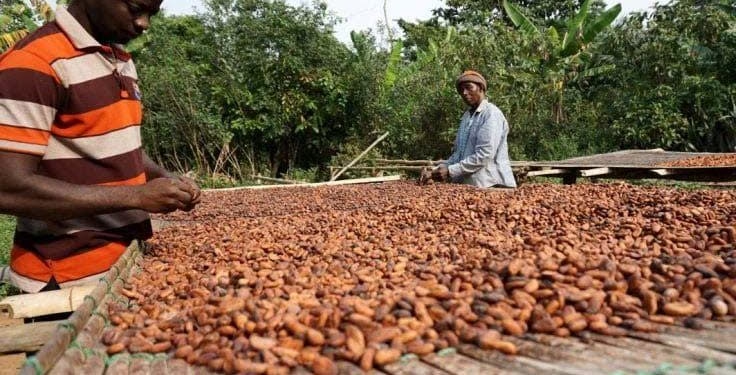
Moses Djan Asiedu, Administrator of the Ghana Cooperative Cocoa Farmers and Marketing Association Limited, described the proposed law as unfair, noting that many farmers invest their own resources to acquire land, establish cocoa farms, and maintain plantations for years before seeing any returns. “If cocoa is considered a national asset, then farmers should also receive greater support to cover production costs,” he said, urging the government to balance conservation efforts with improved incentives for growers. Beyond protecting cocoa farms, the bill also introduces tougher penalties against illegal mining (galamsey) on cocoa lands. Individuals convicted of illegally mining on cocoa farms could face 10 to 20 years’ imprisonment, in addition to substantial fines for every cocoa tree destroyed during mining activities.
Ghana is the world’s second-largest cocoa producer after Côte d’Ivoire, and cocoa contributes nearly 15 percent of the country’s export earnings, making the sector critical to the national economy. The government regulates cocoa prices through the Ghana Cocoa Board (COCOBOD), which sets producer prices each season to shield farmers from volatility in global markets. The legislation comes after unprecedented swings in global cocoa prices. Cocoa futures surged to record highs of more than US$12,000 per metric tonne in 2024 due to supply shortages before falling sharply to around US$4,000 as production recovered and supply outpaced demand. If signed into law, the bill is expected to strengthen the protection of Ghana’s cocoa-growing areas while fueling debate over farmers’ property rights, compensation, and the long-term sustainability of the country’s cocoa industry.