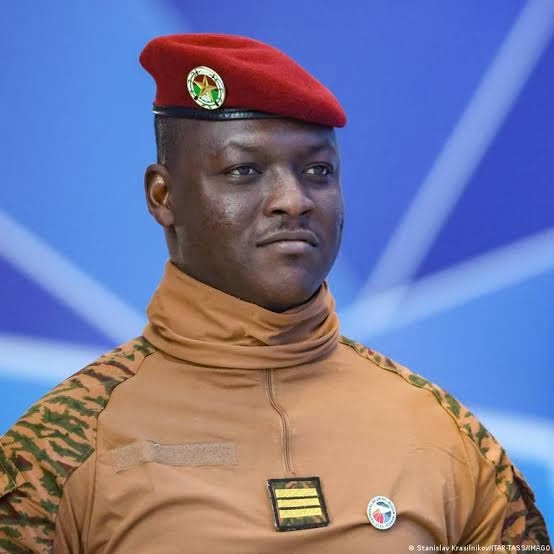

Burkina Faso’s military leader, Captain Ibrahim Traoré, has publicly dismissed speculation of internal divisions within the ruling junta, insisting he remains firmly in control of the country and warning that no rival leadership will be tolerated. Addressing community leaders in Ouahigouya, northern Burkina Faso, on Thursday, Traoré rejected reports of a power struggle within the military government that seized power in a September 2022 coup. “There can’t be two captains on one ship,” Traoré said, adding that everyone serving under him understands his leadership style and the mission of the transitional government.
His remarks come amid growing speculation over the unexplained absence of two senior figures in the military administration Oumarou Yabré, the junta’s deputy leader and a key figure in Burkina Faso’s intelligence services, and Farouk Azaria Sorgho, government spokesperson and commander of a powerful Rapid Intervention Battalion. According to security sources, Yabré has not reported to his office at the National Intelligence Agency, and the security presence at his residence has reportedly been significantly reduced. Sorgho has also not been seen publicly since mid-May, with his deputy reportedly taking over command of Rapid Intervention Battalion No. 4.
Some security officials have alleged that Sorgho may have been detained by individuals close to Traoré, although the government has not commented publicly on the claims. Seeking to dispel the rumors, Traoré warned that any official who failed to follow the government’s agenda would be removed from office. “If anyone makes a mistake, I’ll remove them without hesitation,” he said. “There are no strongmen around me.” The comments come as security measures have intensified in the capital, Ouagadougou, where authorities have increased military patrols and reinforced checkpoints around key government installations, including the presidential palace.
Residents say roads that had been closed for several years have recently reopened to divert traffic away from sensitive security zones, reflecting heightened protective measures around the seat of government. Burkina Faso continues to battle a worsening insurgency linked to Islamist militant groups operating across the Sahel. Since taking power, Traoré has pledged to restore security, but large areas of the country remain affected by violence despite expanded military operations and closer security cooperation with Russia. The latest developments highlight growing scrutiny of the junta’s internal cohesion as it confronts mounting security challenges and increasing international attention over governance and political stability.