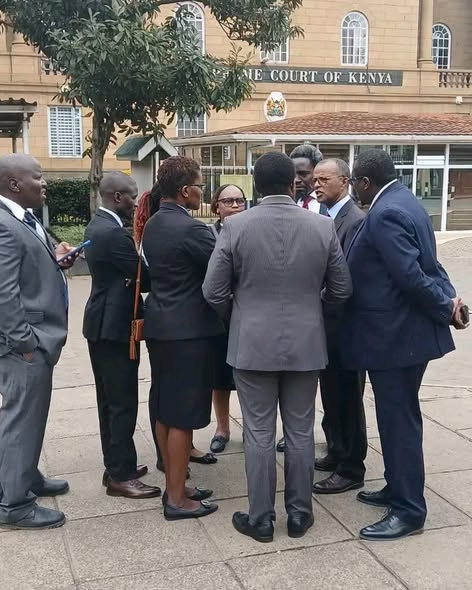

Lawyers across Kenya staged a nationwide court boycott on Wednesday in protest against alleged judicial corruption, case backlogs and what they describe as a failure to implement meaningful reforms within the country’s justice system. The action was organized by the Law Society of Kenya (LSK), whose president, Charles Kanjama, said legal practitioners in courts across the country had largely complied with the boycott. “The court boycott is going on in courts across the country, with many lawyers heeding the call,” Kanjama told reporters. According to the LSK, court cases in Kenya take an average of two years to conclude, with lawyers blaming corruption, administrative inefficiencies and prolonged delays for undermining public confidence in the judiciary.
Following the one-day nationwide strike, the society announced plans to continue boycotting specific judges and magistrates accused of obstructing anti-corruption efforts and disciplinary proceedings within the judiciary. Among those named by the lawyers is Chief Justice Martha Koome, the head of Kenya’s Supreme Court, whom critics accuse of failing to address longstanding governance and accountability concerns in the judicial system. Prominent lawyer Ahmednasir Abdullahi said the legal profession had reached a breaking point. “As lawyers, we are tired of a corrupt judiciary that refuses to reform itself,” he said.
Former Law Society President Eric Theuri warned that unresolved concerns about judicial independence and integrity could undermine confidence in the country’s democratic processes, particularly if election-related disputes arise ahead of Kenya’s next general elections. “The judiciary is irredeemably compromised and is unable to act as an impartial arbiter,” Theuri said. The protests coincided with the arrest of a magistrate by the Ethics and Anti-Corruption Commission (EACC), which alleged the judicial officer had solicited a bribe to influence the outcome of a criminal case. The arrest added to concerns over corruption within Kenya’s justice system. The judiciary has not issued a detailed response to the boycott, but it has previously maintained that it remains committed to improving efficiency, strengthening accountability and safeguarding judicial independence. The LSK says it will continue pressing for reforms aimed at enhancing transparency, reducing case backlogs and restoring public trust in one of Kenya’s most important democratic institutions.