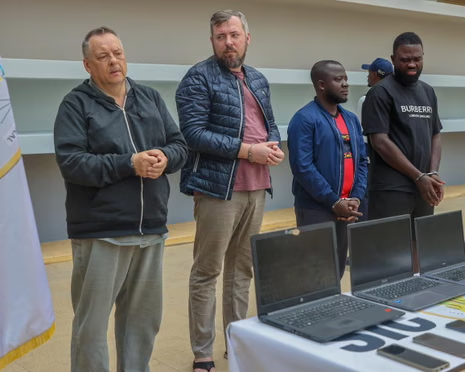

An Angolan court has sentenced two Russian nationals to prison after finding them guilty of terrorism, espionage and other offences linked to an alleged political influence operation ahead of the country’s next presidential election. The ruling, delivered late Tuesday in Luanda, saw political consultant Igor Ratchin sentenced to 11 years in prison, while translator Lev Lakshtanov received an eight-year prison term. Both men had pleaded not guilty to all charges. The pair were arrested in August 2025 over allegations that they helped organize anti-government protests, spread disinformation and attempted to influence Angola’s political landscape before the country’s upcoming presidential election. According to the indictment, prosecutors alleged the two Russians were connected to Africa Politology, a network Angolan authorities claim evolved from the now-defunct Wagner Group, the Russian private military organization that has operated in several African countries.
Prosecutors argued that the network sought to promote pro-Russian and anti-Western narratives, build relationships with political actors and influence public opinion through coordinated information campaigns. The court convicted the defendants on four of the 11 charges brought against them, including criminal association, terrorism, espionage and illegal possession of foreign currency. Both men denied any ties to the Wagner Group or the Russian government, maintaining that they were in Angola to establish a Russian cultural center in Luanda. Ratchin described himself as a businessman, while Lakshtanov said his nearly four decades of academic and professional work in Angola were incompatible with the accusations against him.
The case also involved two Angolan nationals. Sports journalist Amor Carlos Tomé received a two-year suspended sentence, while political activist Francisco Oliveira was acquitted of all charges. Prosecutors immediately appealed the verdicts, meaning Tomé is expected to remain in custody while the appeal is heard. During the trial, prosecutors alleged the defendants paid local journalists and analysts more than US$24,000 to publish pro-Russian and anti-government content aimed at fueling political unrest. Authorities also cited documents, photographs and electronic communications allegedly linking the defendants to the deadly protests that occurred in Angola in 2025.
The defense repeatedly challenged the prosecution’s evidence, arguing that the indictment relied heavily on assumptions rather than verifiable facts. Lawyers also criticized procedural aspects of the trial after prosecutors declined to read the indictment aloud during an early public hearing, despite objections from the defense. The defendants had requested extradition to Russia under bilateral judicial cooperation agreements, but it remains unclear whether the court ruled on that request. The Russian Embassy in Angola had not publicly commented on the verdict at the time of publication. The case has attracted international attention amid growing scrutiny of Russian political and security influence across Africa, particularly following the expansion of Wagner-linked operations in countries such as the Central African Republic, Mali and Madagascar. Angola’s government has maintained that safeguarding national security and protecting its democratic institutions remain priorities ahead of the next presidential election.