


Each spring, the streets of Pretoria and Johannesburg come alive in a sea of lavender as jacaranda trees burst into bloom a spectacle that has become one of South Africa’s most cherished seasonal traditions. The jacaranda mimosifolia, known for its vibrant purple flowers and sweet fragrance, is not native to South Africa. The trees were brought from Brazil in the early 1800s, when horticulturists introduced the first seeds to the Cape region around 1810, according to Jason Sampson, head of the botanical gardens at the University of Pretoria. From there, the trees gradually spread northward across the country.
By the early 1900s, jacarandas had become central to the urban transformation of Pretoria, where city planners distributed seedlings to residents to beautify the streets. Today, the city is affectionately called the “Jacaranda City”, boasting an estimated 70,000 trees many over a century old. Although beloved, jacarandas are officially classified as invasive species because they are not indigenous to South Africa. However, authorities allow existing trees and those planted within urban areas to remain, given their deep cultural and historical roots.
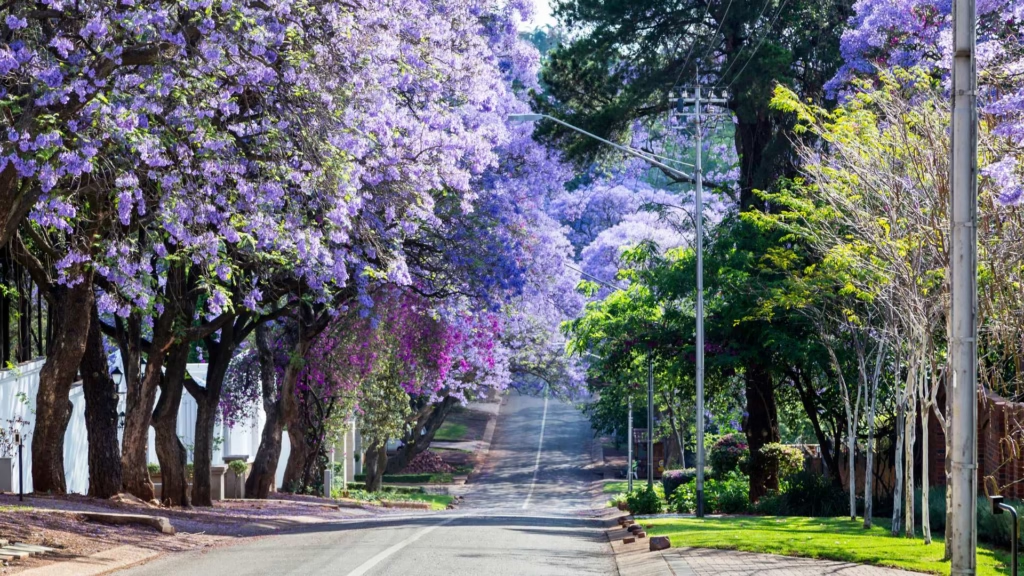
The trees thrive in Gauteng’s humid, subtropical climate, with blossoms appearing each September and October, just before the summer rains. Their bloom lasts two to three weeks, often carpeting sidewalks in purple petals and drawing tourists and photographers from around the world. For locals, the trees mark more than just a change in weather. “Jacarandas make me feel inspired,” said Naledi Mnisi, a Johannesburg resident. “They represent a new season and a time of growth. When you run under them in the morning, it feels like the city is waking up with you.” As another jacaranda season unfolds, the purple canopy across Gauteng continues to symbolize renewal, beauty, and the enduring charm of South Africa’s spring.


