
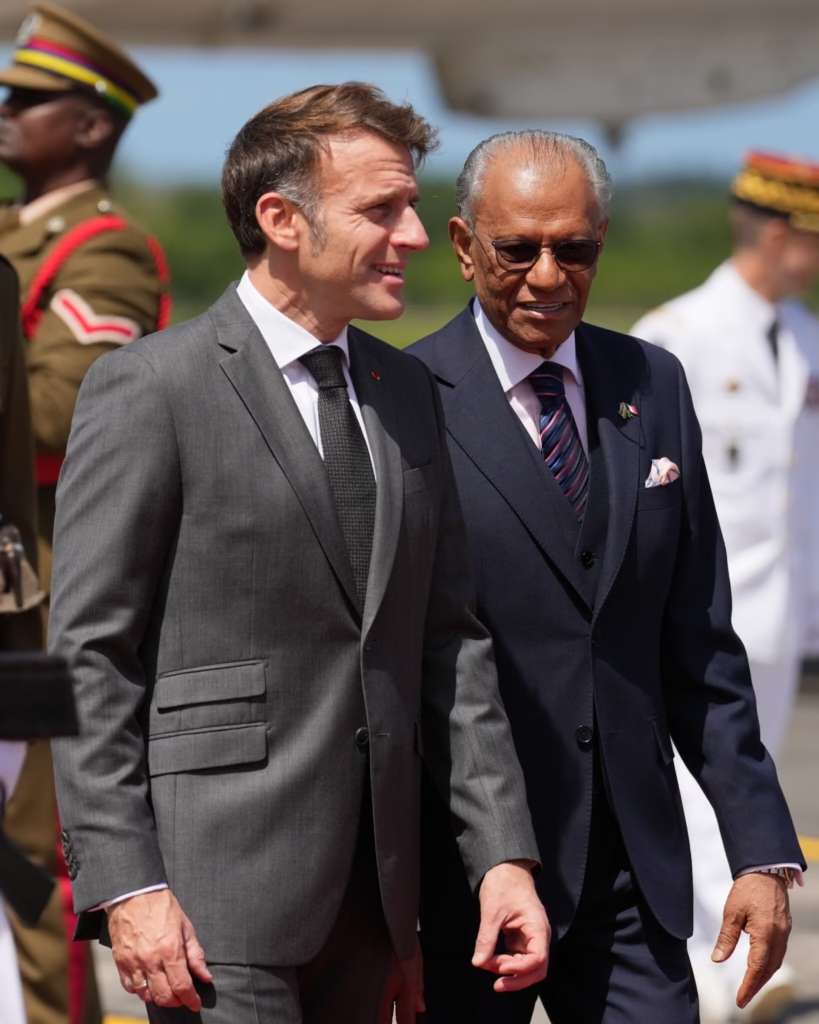

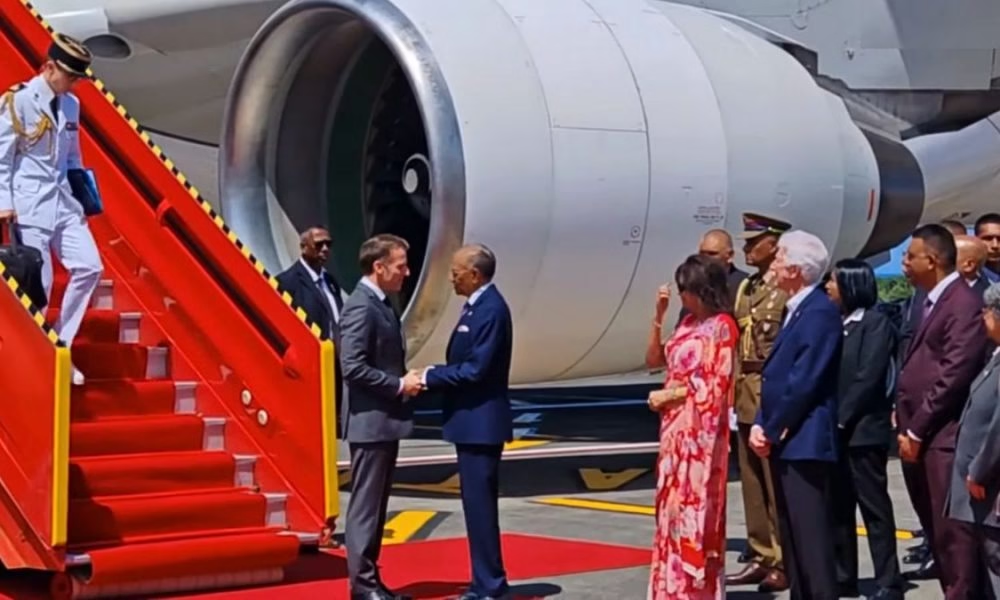
French President Emmanuel Macron will begin a four-nation tour of Africa this week as Paris seeks to reset strained ties and reinforce its diplomatic presence on the continent, the Élysée Palace announced on Tuesday. Macron’s trip starts Thursday in Mauritius, where he will push for deeper cooperation with the island nation and strengthen ties with nearby French territories Mayotte and Réunion. France maintains strategic interests in the Indian Ocean, including maritime security and economic partnerships.
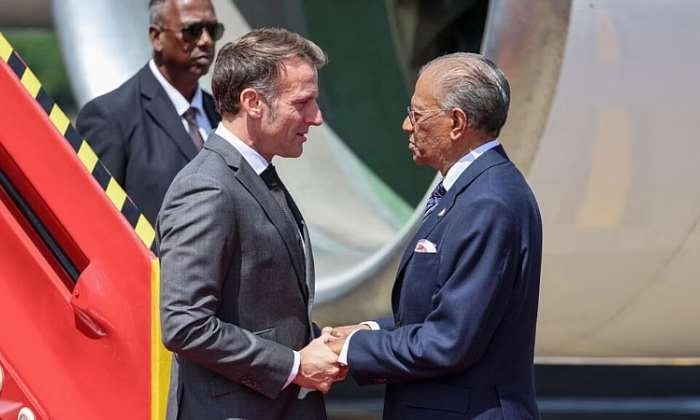
From Mauritius, Macron will travel to South Africa, where he will attend the G20 Summit in Johannesburg. This year’s meeting is expected to draw global attention due to the United States’ announced boycott, a move that could shift diplomatic focus toward emerging economies. Macron had hoped to use the summit as an opportunity to meet privately with Algerian President Abdelmadjid Tebboune to ease ongoing tensions between Paris and Algiers, but the bilateral meeting remains unconfirmed.
The tour continues with a high-stakes stop in Gabon, where Macron will meet newly elected President Brice Oligui Nguema. The general won elections in April, formalising the end of a two-year transitional period that followed the 2023 ousting of long-time leader Ali Bongo Ondimba, a traditional ally of France. According to the Élysée, Macron will signal France’s “support” for Gabon’s return to constitutional order while navigating diplomatic sensitivities in a region where French influence has waned.
Macron will conclude his trip in Angola for the EU–African Union Summit, where leaders plan to expand cooperation on security, trade, agriculture, and green energy. France sees Angola as an increasingly important partner, especially amid broader geopolitical competition from China, Russia, and Turkey across Africa. This latest tour comes as France faces criticism and reduced military footprints in West Africa following coups in Burkina Faso, Mali, and Niger. Paris says the trip aims to “spur new dynamics” in partnerships built on equality rather than old colonial ties.


