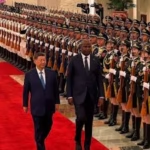

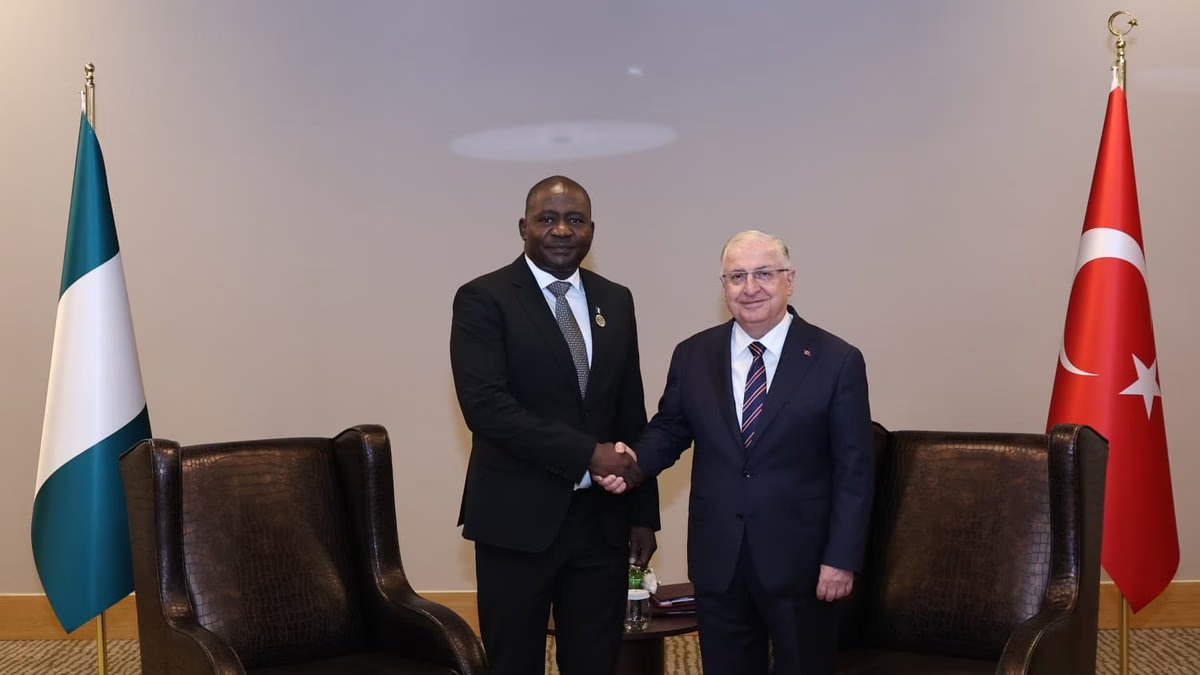
Nigeria and Turkey have signed a new defence cooperation agreement aimed at strengthening Nigeria’s fight against insurgency and improving its military capabilities. The deal was confirmed after talks between Nigeria’s Chief of Defence Staff, Christopher Musa, and Turkey’s Defence Minister, Yaşar Güler, on the sidelines of the Antalya Diplomacy Forum 2026. Under the agreement, 200 Nigerian special forces personnel will be sent to Turkey for advanced training, with plans also underway to establish a major military training facility in Nigeria. The partnership will further cover technology transfer, intelligence sharing, and enhanced surveillance capabilities.
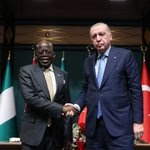
Nigeria has been battling a jihadist insurgency for over 17 years, primarily driven by Boko Haram and its offshoot, Islamic State West Africa Province. In addition, armed criminal groups, commonly referred to as bandits continue to carry out kidnappings, raids, and killings in the northwest. The broader Sahel region has also seen a surge in extremist violence, increasing pressure on Nigeria’s security forces. In response, Abuja has been seeking to diversify its military partnerships beyond traditional allies like the United States. The agreement follows a recent visit by President Bola Tinubu to Turkey, the first by a Nigerian leader in nearly a decade, signaling closer bilateral ties.
Turkey has emerged as a major global exporter of cost-effective military hardware, particularly armed drones, which are increasingly used in modern counterinsurgency operations. Nigerian officials say leveraging Turkish expertise could significantly enhance their operational effectiveness. The Nigerian defence ministry described the agreement as a “significant step forward” in bilateral relations, with expectations that it will strengthen Nigeria’s capacity to respond to evolving security threats.