


Nigerian separatist leader Nnamdi Kanu has dismissed his entire legal team and declared that he will represent himself in his ongoing terrorism trial, intensifying one of Nigeria’s most politically charged cases. The 58-year-old leader of the outlawed Indigenous People of Biafra (IPOB) opened his defense on Thursday before a Federal High Court in Abuja. He immediately challenged the court’s jurisdiction to try him—a motion the presiding judge swiftly rejected. Kanu, who holds dual Nigerian and British citizenship, faces charges of terrorism and incitement to violence over his alleged role in IPOB’s campaign for an independent Biafran state in southeastern Nigeria. The group, banned as a terrorist organization in 2017, has been linked by authorities to attacks on security forces and public infrastructure through its armed wing, the Eastern Security Network (ESN)—claims IPOB denies.
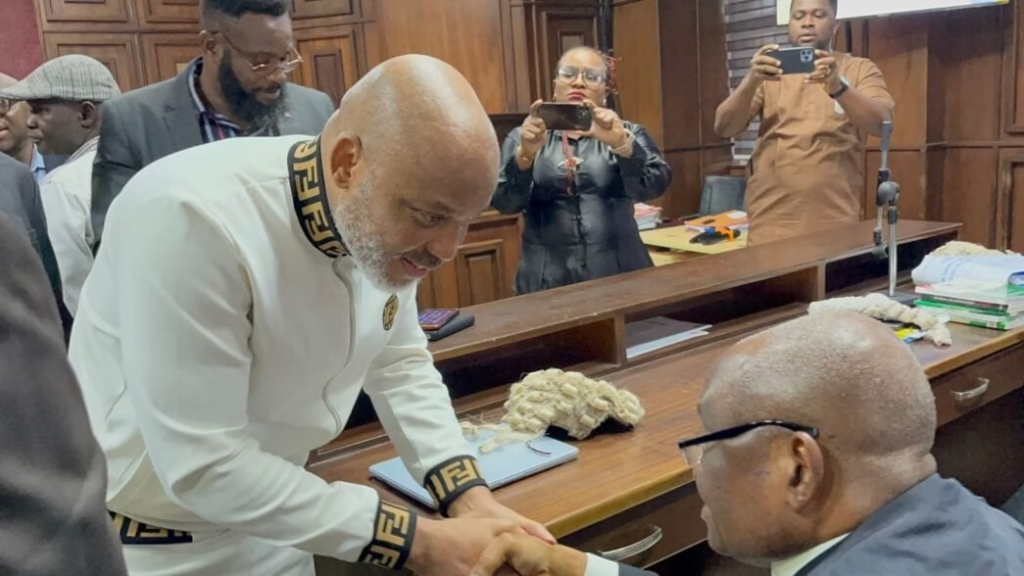
Just a day before firing his lawyers, Kanu had filed a list of high-profile witnesses, including former Attorney General Abubakar Malami, to testify in his defence. He gave no reason for dismissing his counsel, and the lawyers have not commented publicly. Kanu also argued that his continued detention violates a 2022 Court of Appeal ruling that dismissed the charges against him and ordered his release. However, the Supreme Court overturned that ruling in late 2023, reinstating the charges and clearing the way for his trial to proceed. Tensions remain high around his case. On Monday, police fired tear gas to disperse pro-Biafra protesters who gathered near the court complex in Abuja to demand his release.
Kanu’s legal and political battles date back nearly a decade. Arrested first in 2015, he jumped bail two years later after a military raid on his home in Abia State. In 2021, he was rearrested under controversial circumstances, with his lawyers alleging he was abducted in Kenya and illegally repatriated to Nigeria a claim both governments have avoided addressing. Despite repeated detentions and crackdowns, Kanu remains a symbolic figure for millions of Biafra supporters, particularly across Nigeria’s southeast, where calls for self-determination continue to test the unity of Africa’s most populous nation.


