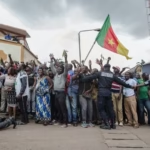
Citizens in Burkina Faso, Mali, and Niger have largely welcomed their governments’ joint decision to withdraw from the International Criminal Court (ICC), calling it a landmark move toward “true independence” from foreign influence. The three military-led states which formed the Alliance of Sahel States (AES) in 2023 announced on Monday that they would no longer recognize the ICC, denouncing it as an “instrument of neo-colonial repression.” Their withdrawal takes effect one year after notification to the UN Secretary General, though ongoing investigations launched before that date will remain under ICC jurisdiction.
In Ouagadougou, Burkina Faso’s capital, local resident Emmanuel Kafando said the decision “was long overdue,” arguing that the ICC disproportionately targets African leaders. “It was high time we left this court, which was practically designed only for African leaders and not for the rest of the world,” he said. Another resident, Lionel Dolomweogo, described the move as “a victory for sovereignty,” adding that “every sovereign state must be able to take responsibility in all areas, including justice.” Similar sentiments were echoed in Bamako and Niamey, where supporters see the withdrawal as part of a broader push to distance their nations from Western political and legal structures.

The decision comes at a time when the three Sahelian nations are grappling with worsening jihadist insurgencies linked to al-Qaeda and the Islamic State. Their armies, as well as armed groups, have been accused by human rights organizations of committing atrocities against civilians. Critics warn that leaving the ICC removes a vital international safeguard for accountability.
Since its establishment in 2002, the ICC has pursued cases of genocide, war crimes, crimes against humanity, and aggression, but has often faced criticism for perceived bias, with many of its indictments directed at African leaders. International observers argue that while the AES withdrawal reflects growing disillusionment with global institutions, it may deepen the region’s isolation and undermine efforts to address human rights abuses. Meanwhile, the three governments are pushing for the creation of “indigenous mechanisms of justice” that they say will align better with local values and sovereignty.