
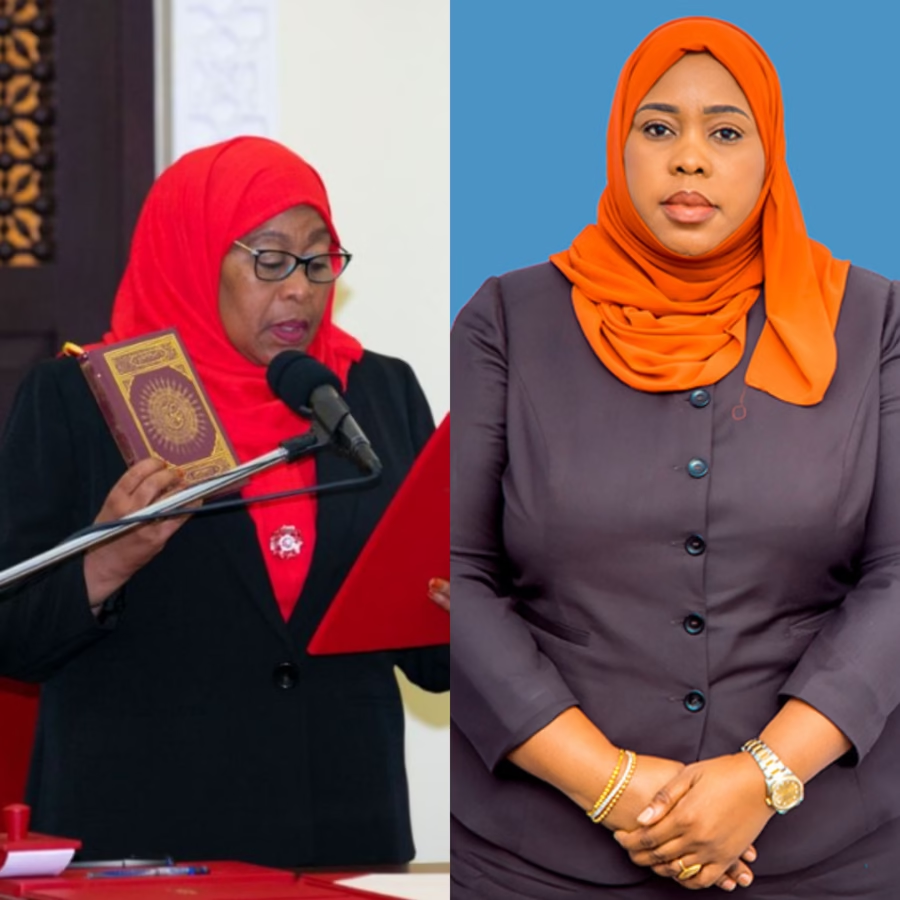

Tanzanian President Samia Suluhu Hassan has come under renewed public scrutiny after appointing her daughter and son-in-law to senior government positions during a major cabinet reshuffle announced on Monday, 17 November, from Chamwino State House in Dodoma. The president named 27 ministers and 29 deputy ministers, replacing seven senior officials from her previous administration. Among the new appointees is her daughter, Wanu Hafidh Ameir, who was named Deputy Minister of Education. Wanu, 43, is a Zanzibar House of Representatives member for Makunduchi Constituency and previously served on parliamentary committees focused on social welfare and governance.
Samia’s son-in-law, Mohamed Mchengerwa, 46, has been appointed Minister of Health—a key portfolio at a time when Tanzania continues to strengthen its healthcare system following the COVID-19 pandemic. Mchengerwa, the MP for Rufiji Constituency, has held multiple cabinet roles in the past, including Minister for Culture, Arts, and Sports, and Minister of State for Public Service Management. The reshuffle also saw Ridhwani Kikwete, son of former President Jakaya Kikwete, appointed Minister of Public Service Management and Good Governance. His selection continues the pattern of political families maintaining influence in national leadership. Ridhwani represents Chalinze Constituency in the Pwani Region.
Other significant changes include Khamis Mussa Omar becoming Finance Minister, succeeding Mwigulu Nchemba, who was elevated to Prime Minister last week. Mahmoud Thabit Kombo retained his position as Minister for Foreign Affairs and East African Cooperation. The new cabinet is scheduled to be sworn in on Tuesday. Samia’s appointments echo trends in several African nations where leaders have been criticized for placing relatives or close allies in powerful government positions. In Uganda, President Yoweri Museveni has long faced accusations of nepotism, with his wife Janet serving as Education Minister and his son, General Muhoozi Kainerugaba, leading the defence forces. In Rwanda, President Paul Kagame recently denied similar accusations after public speculation over whether his daughter, Ange Kagame, was being prepared for political office. The Tanzanian government has not responded to concerns regarding nepotism, but analysts say the appointments could influence public perception ahead of future elections as opposition groups call for stronger transparency and merit-based leadership.


