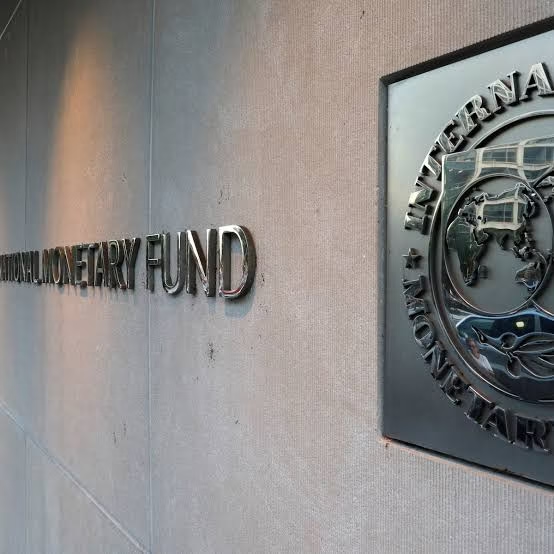

The International Monetary Fund (IMF) has reached a staff-level agreement with Senegal on a $2.2 billion, 36-month financing program aimed at restoring economic stability and putting the country’s debt on a more sustainable path. The proposed Extended Credit Facility will support Senegal’s 2026–2029 reform program, including stronger public finances, improved fiscal transparency, greater social protection and measures to encourage private-sector growth. The agreement still requires approval by the IMF’s management and Executive Board. The deal follows the discovery of more than $11 billion in previously unreported debt accumulated under the former administration of President Macky Sall. The disclosure forced the IMF to suspend an earlier $1.8 billion program and triggered a major reassessment of Senegal’s finances.

The IMF estimates Senegal’s total public-sector debt reached about 132% of GDP at the end of 2024. However, the economy has shown some resilience, growing by 6.7% in 2025, helped largely by the expansion of oil and gas production. The fiscal deficit also narrowed from 13.4% of GDP in 2024 to 6.4% in 2025. As part of the new program, Senegal will be expected to strengthen debt management, improve budget controls, increase domestic revenue, monitor government arrears and improve oversight of state-owned enterprises. The IMF also said Dakar intends to seek debt treatment to restore long-term debt sustainability.
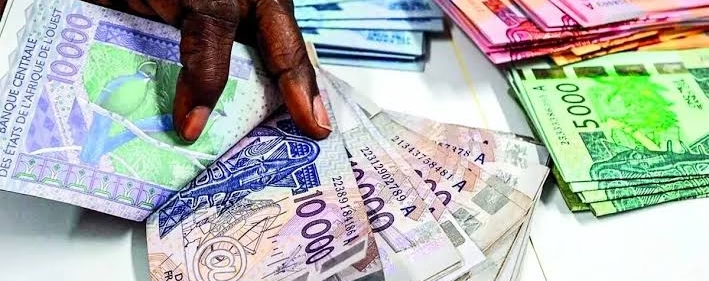
The agreement comes at a difficult time for Senegal’s finances. The country has relied heavily on regional bond markets since the previous IMF program was suspended, but borrowing costs have remained high. The IMF said its new program could help unlock additional financing from the World Bank, African Development Bank and other development partners. The government must also address the political challenges surrounding the reforms. Former Prime Minister Ousmane Sonko, now president of the National Assembly, has previously opposed debt restructuring, while the government has faced pressure to find a solution to the country’s mounting debt without placing excessive pressure on households.