


Senegal’s National Assembly has rejected a motion seeking to charge former president Macky Sall with high treason, halting a push by lawmakers to hold him accountable for alleged financial misconduct during his 12-year tenure. The proposal, filed by Guy Marius Sagna, an MP from the ruling PASTEF party, accused Sall of concealing public debt amounting to nearly $7 billion and approving unauthorized foreign loans outside official budgetary channels. However, the parliament’s legal affairs committee ruled the motion inadmissible on technical grounds, citing a “procedural flaw” (vice de forme). The decision effectively blocks the case from being referred to Senegal’s Haute Cour de Justice, the only body empowered to prosecute former presidents and ministers for serious offenses.
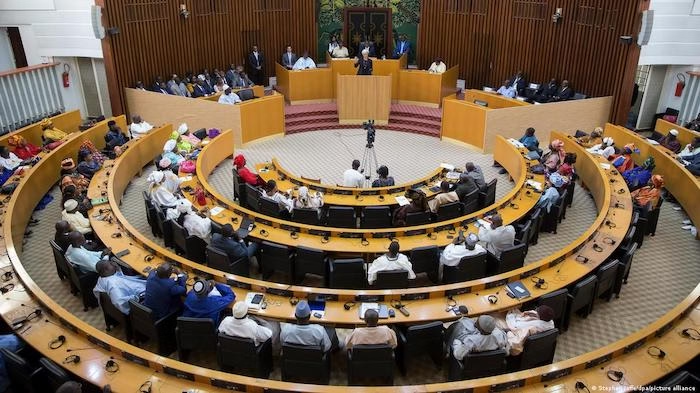
The ruling grants Sall; who led Senegal from 2012 to 2024 a temporary reprieve amid ongoing scrutiny of his administration’s financial management. Critics, including civil society groups and opposition figures, argue that the dismissal exposes weaknesses in parliamentary oversight and judicial independence. Sagna and other PASTEF members vowed to refile the motion, insisting the allegations deserve a full investigation. “This is not the end,it’s a pause,” Sagna said after the vote. “The Senegalese people have a right to know how their money was managed.”
Analysts say the episode highlights how procedural hurdles can shield powerful figures from accountability in Senegal’s evolving democracy. Some warn that political divisions between the new PASTEF-led government and Sall’s loyalists could deepen as anti-corruption reforms take center stage. Macky Sall, now based partly in Europe, has denied any wrongdoing, maintaining that his administration’s debt policies were transparent and vital for national development. For now, the parliament’s ruling delays any legal reckoning but the debate over accountability and governance in one of West Africa’s most stable democracies is far from over.


