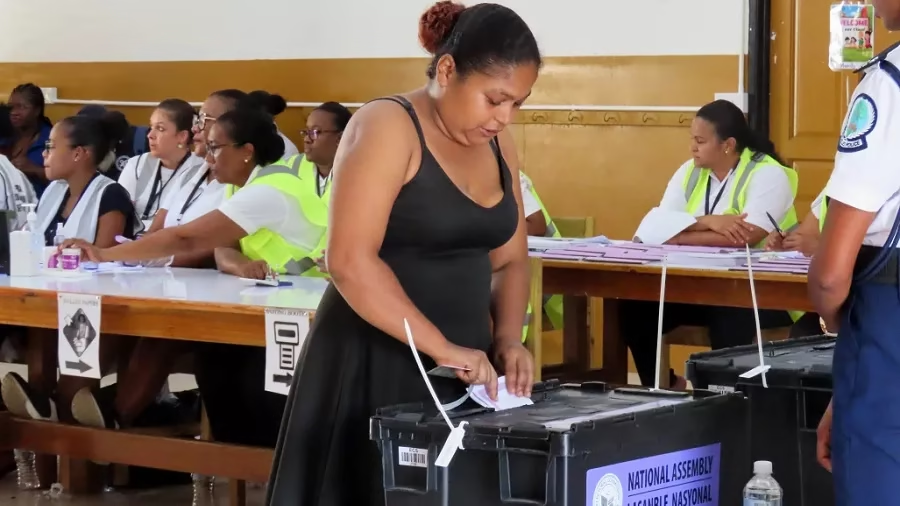
Voters in Seychelles went to the polls on Saturday to elect both a president and a new parliament, in a closely watched contest for Africa’s smallest nation. President Wavel Ramkalawan, an Anglican priest turned politician, is seeking a second five-year term, facing off against veteran lawmaker Patrick Herminie of the United Seychelles Party. Polling stations opened at 7 a.m. across the Indian Ocean archipelago, with election officials reporting smooth operations and high voter turnout. Long queues were seen in Victoria, the capital on Mahé, as well as on smaller islands. Just over 77,000 citizens are registered to vote. If no candidate secures more than 50% of ballots, a runoff will follow between the top two contenders.
Ramkalawan made history in 2020 when he became the first opposition leader since independence in 1976 to defeat the ruling party. His Linyon Demokratik Seselwa party is campaigning on economic recovery, social development, and environmental sustainability. Herminie, a former parliamentary speaker and anti-drug agency chief, is positioning himself as the candidate of change.
The vote comes at a critical time. While Seychelles is among Africa’s richest countries per capita thanks to luxury tourism, it faces deep challenges. A long-term lease of Assomption Island to a Qatari company for hotel development has triggered a constitutional case and national debate about sovereignty, foreign influence, and environmental stewardship. The country also grapples with one of the world’s highest rates of heroin addiction. A UN report in 2017 flagged the islands as a drug transit hub, and by 2023, an estimated 6,000 of its 120,000 people were using heroin nearly 10% of the population. Both Ramkalawan and Herminie face criticism for failing to curb the crisis.
With its 115 islands spread across 390,000 square kilometers of ocean, Seychelles is also on the frontline of climate change, confronting rising seas and other environmental risks. The outcome of this election will shape how the island nation balances economic opportunity, sovereignty, and social stability in the years ahead.