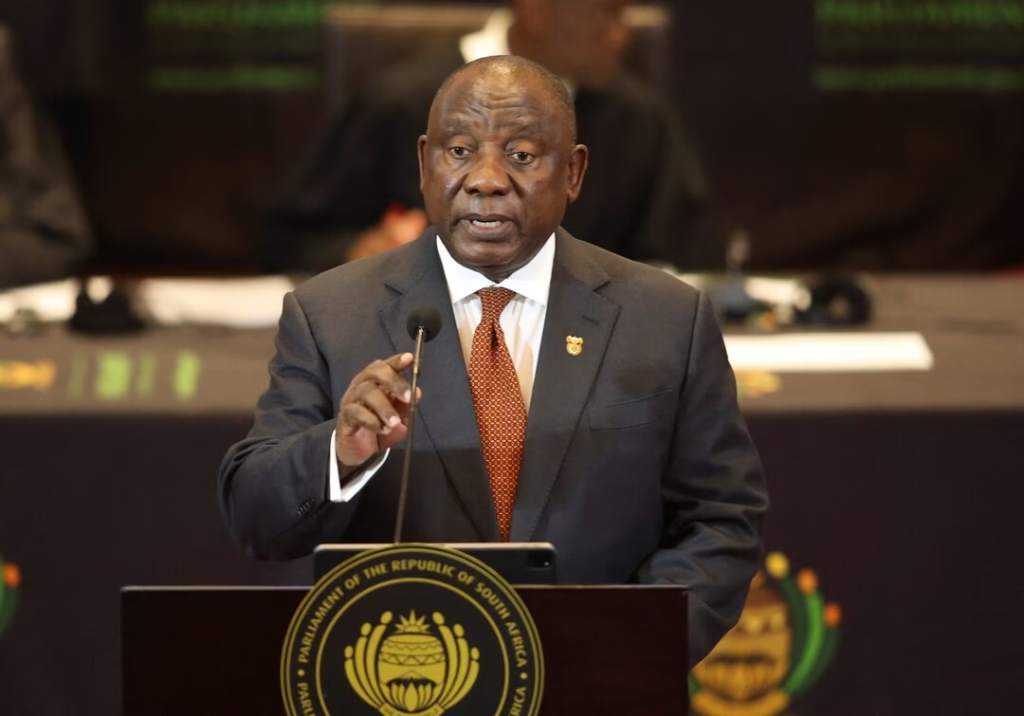

South Africa is set to begin a sweeping “national dialogue” on Friday, bringing together political parties, civic leaders, and ordinary citizens in an ambitious effort to confront the country’s toughest challenges — from poverty and unemployment to corruption and crime. President Cyril Ramaphosa announced the initiative in June after mounting calls from civil society for a nationwide “soul-searching” process. The move comes in the wake of the African National Congress (ANC) losing its parliamentary majority for the first time since the dawn of democracy in 1994, forcing it into a coalition government.
“The national dialogue must be a place where everyone has a voice… a people-led, society-wide process to reflect on the state of our country and reimagine our future,” Ramaphosa said ahead of the talks. The opening two-day convention in Pretoria will feature in-person and virtual discussions, followed by a series of provincial dialogues in all nine provinces. Participants range from high-profile public figures — including Springbok rugby captain Siya Kolisi, “Black Panther” actor John Kani, and former Constitutional Court Judge Edwin Cameron — to grassroots community representatives.
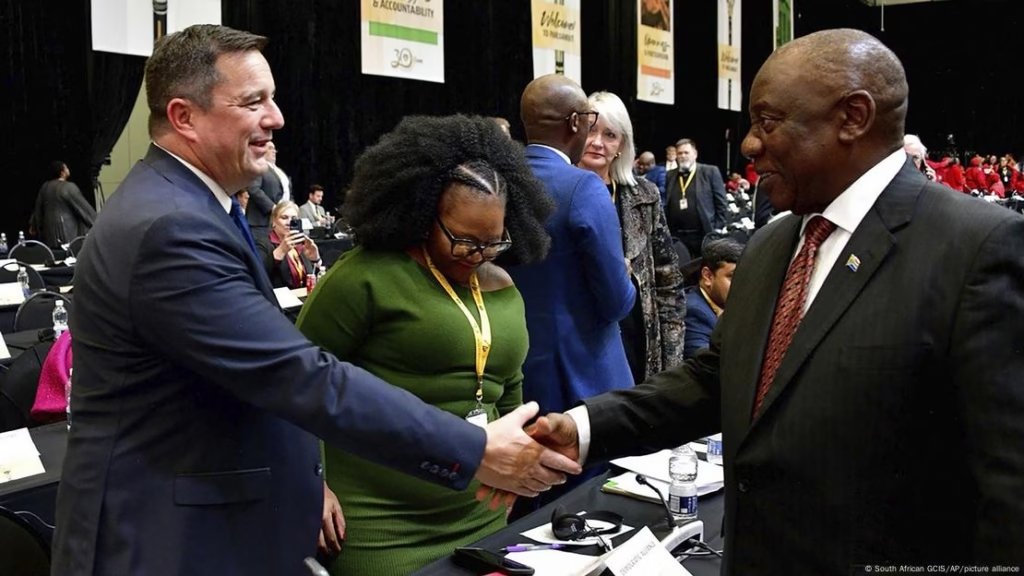
However, the process has already been marred by controversy. The Democratic Alliance (DA) withdrew over a dispute with the ANC following the dismissal of one of its deputy ministers, calling the talks a “waste of public money.” The official opposition, the MK Party, has also refused to take part. Several prominent foundations have pulled out of the first convention, citing rushed planning, though they remain open to future participation.
The estimated cost — rumored to be as high as $40 million — has drawn criticism, though the Presidency insists the figure is inflated. Political analysts argue that a genuine nationwide consultation inevitably requires significant resources. South Africa has a history of using dialogue to drive change — most notably the multi-party negotiations that ended apartheid in the early 1990s. But more than three decades later, the country faces stark economic and social divides: unemployment above 30%, some of the world’s highest inequality, persistent corruption, and a violent crime rate that rattles communities daily.