


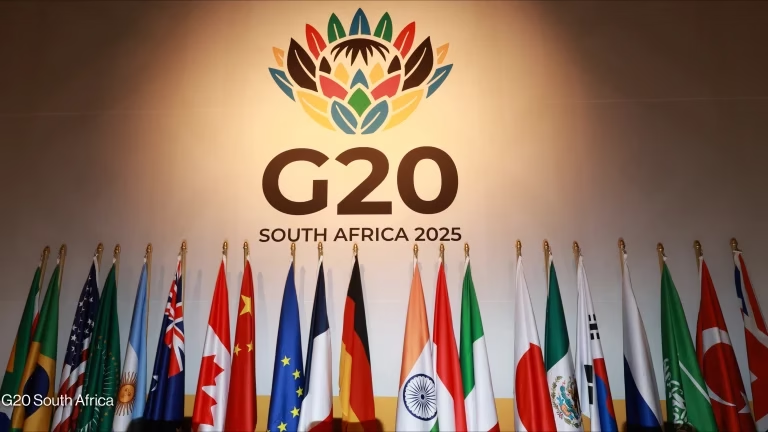
South African officials from across the political spectrum have sharply criticized the United States’ decision to boycott the upcoming G20 summit in Johannesburg, calling the move misguided and damaging to Washington’s global standing. President Cyril Ramaphosa described the boycott as “their loss,” stressing that the summit will go ahead with full participation from all other invited world leaders. “In my experience, boycotts never really work—they often achieve the opposite,” he said, insisting that the U.S. absence would not derail South Africa’s agenda as this year’s G20 host. The boycott was announced by former U.S. President Donald Trump, who cited widely debunked allegations that South Africa is persecuting its white minority population and allowing systematic land seizures. The claims have been discredited by independent watchdogs, government statistics, and foreign diplomatic missions.
Broad political rejection of U.S. claims
South African politicians from rival parties united in condemning the U.S.’s justification.
Democratic Alliance leader John Steenhuisen said Washington appeared to be acting on misinformation: “It would have been good for the U.S. leadership to see that what they’re being told is simply not the reality.”
Economic Freedom Fighters leader Julius Malema added that Trump “knows there is no genocide in South Africa,” accusing fringe groups of fueling false narratives.
A worsening diplomatic standoff
The boycott comes at a historically low moment in U.S.–South Africa relations. Tensions have spiked over Pretoria’s decision to take Israel to the International Court of Justice on genocide charges—an action strongly opposed by Washington. The situation is further complicated by the U.S. taking over the G20 presidency from South Africa at the end of the year. Diplomats warn the fallout could hinder cooperation on global economic policy, climate financing, and trade reform issues requiring unity from the world’s largest economies. South African officials say they remain open to dialogue but will not allow misinformation to undermine the country’s international role.


