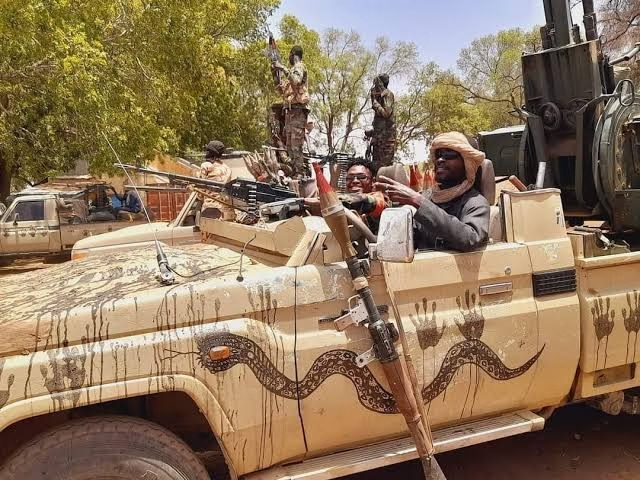

Sudanese civilians and analysts are warning that the country’s military may be repeating the mistakes that led to the devastating civil war by increasingly relying on powerful allied militias to fight the paramilitary Rapid Support Forces (RSF). The conflict, which erupted in April 2023 after a power struggle between the Sudanese Armed Forces (SAF) led by General Abdel Fattah al-Burhan and the RSF commanded by Mohamed Hamdan Daglo (Hemeti), has killed an estimated 200,000 people and displaced more than 14 million, making it one of the world’s worst humanitarian crises. Although the army has regained control of much of Khartoum, heavily armed militia groups continue to operate openly in government-held areas, raising concerns that today’s allies could become tomorrow’s rivals.
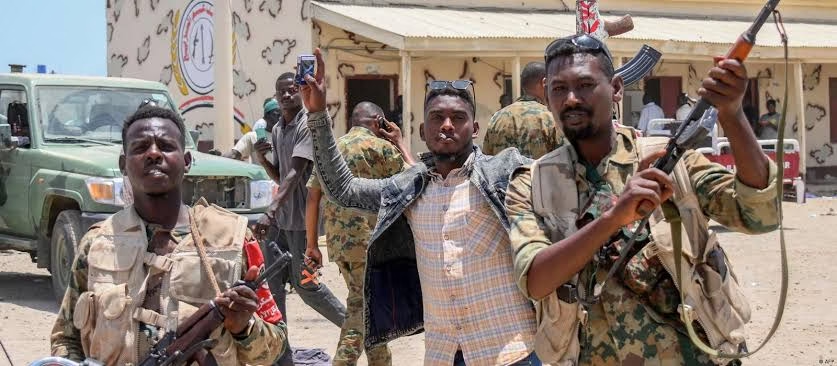
The three most influential pro-army militias are the Joint Forces, a coalition of former Darfur rebel groups; the Sudan Shield Forces, whose fighters defected from the RSF; and the Baraa ibn Malek Brigade, an Islamist force believed to have ties to Iran. Since the war began, the groups have expanded their ranks and now possess heavy weapons, drones and anti-aircraft systems. Residents in Khartoum, Port Sudan and Wad Madani say armed militia members remain visible in public despite official orders restricting unauthorized weapons. Many fear the growing influence of these groups could undermine long-term stability. The concern stems from Sudan’s recent history. The RSF itself evolved from the Janjaweed militias that were armed by former President Omar al-Bashir during the Darfur conflict before being formally established in 2013. The force later turned against both Bashir and the army, triggering the current war after failed negotiations over its integration into the military.
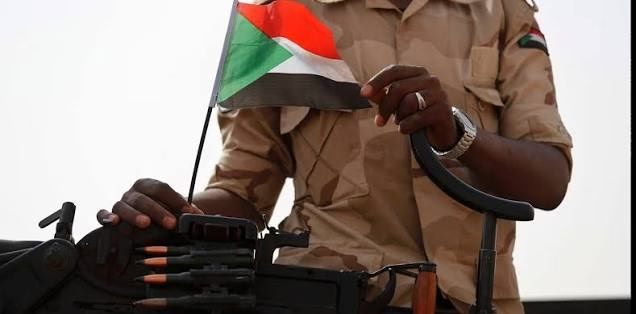
Military leaders have since called for allied militias to integrate into the national army, but there has been little sign that the groups are prepared to surrender their independence. Security analysts say the relationships between the army and its militia allies remain largely tactical, driven by a shared fight against the RSF rather than long-term political unity. Some have identified Sudan Shield Forces leader Abu Aqla Kaykal, a former RSF commander who switched allegiance in 2024, as one of the figures whose growing influence could create future tensions. With multiple armed factions now controlling territory and operating alongside government forces, many Sudanese fear the country could face renewed internal conflict even if the war against the RSF eventually subsides.