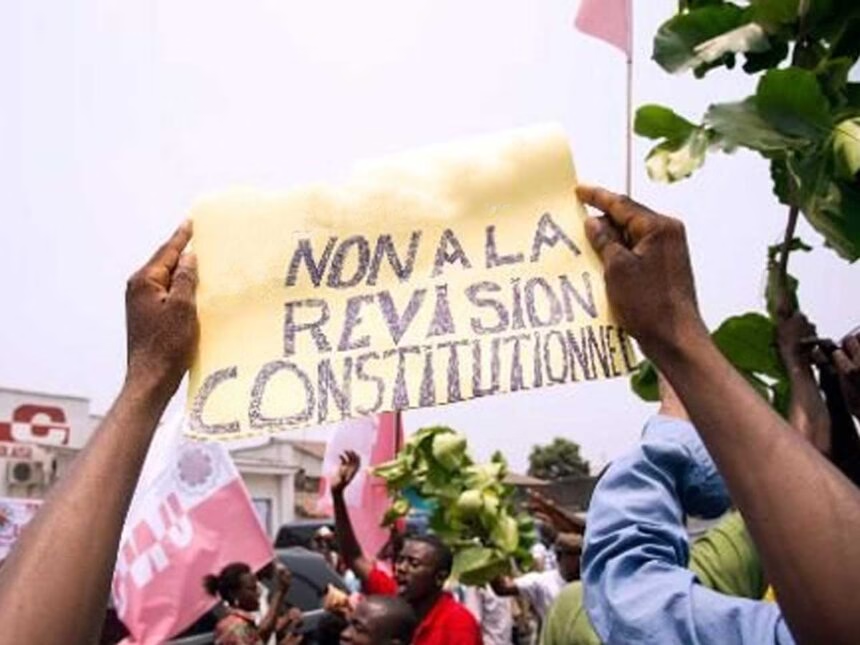

Hundreds of protesters gathered in Vogan, Togo, on Saturday to demand the restoration of the country’s previous constitution, intensifying opposition to constitutional reforms that shifted executive power and extended President Faure Gnassingbé’s political influence. The demonstration began with a traditional libation ceremony before opposition leaders and supporters sang the national anthem. Protesters carried banners and placards denouncing the 2024 constitutional amendments, which replaced Togo’s presidential system with a parliamentary model. Under the revised constitution, executive authority was transferred to the President of the Council of Ministers, a position currently occupied by Gnassingbé, who served as president from 2005 until the reforms took effect. The office has no term limits, allowing Parliament to reappoint its holder indefinitely, while the presidency has become a largely ceremonial role limited to a single six-year term.
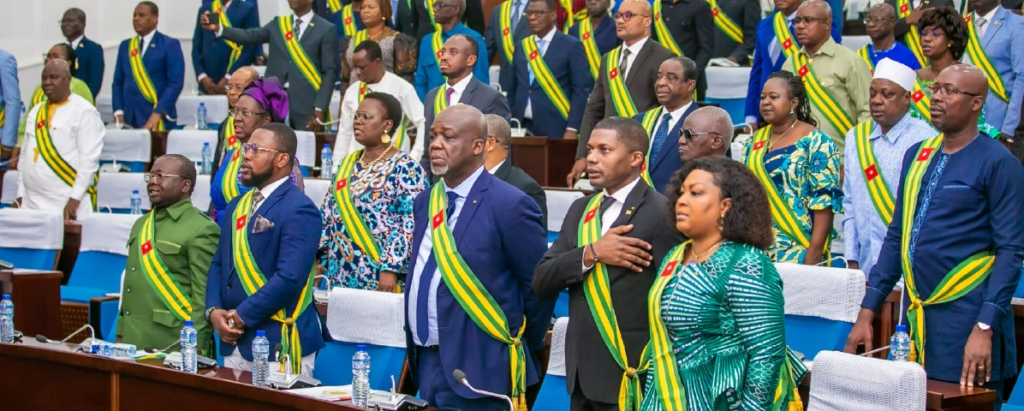
Opposition leaders and civil society groups argue that the constitutional changes were enacted without adequate public consultation and amount to an unconstitutional extension of Gnassingbé’s rule. “The constitutional change that took place in Togo in 2024 is completely illegal. It is a constitutional coup d’état,” said David Dosseh, spokesperson for the civil society group Front Citoyen Togo Debout. The protests come weeks after the ECOWAS Court of Justice ruled that the constitutional reforms violated Togo’s democratic principles, describing them as an “unconstitutional change of government.” Although the court’s decision is advisory and not legally binding, opposition parties say it strengthens their campaign to reverse the reforms. “We believe change can only come through the awakening and mobilization of the people,” said Dodji Apevon, leader of the opposition party Democratic Force for the Republic. Gnassingbé has governed Togo for two decades, succeeding his father, Gnassingbé Eyadéma, who ruled the West African nation for 38 years. Critics argue the constitutional overhaul further consolidates the family’s decades-long grip on power, while the government maintains the reforms are intended to strengthen parliamentary governance and political stability.