For the first time in more than a year, Sudan’s cabinet has convened in Khartoum, marking a symbolic step toward restoring state authority in a city devastated by war. The meeting, chaired by transitional Prime Minister Kamal Idris, comes just over two months after the Sudanese army reclaimed the capital from the Rapid Support Forces (RSF). Until now, the government had been operating from Port Sudan, where it relocated after the civil war erupted in April 2023.
State media described the session as a “return of state institutions” to Khartoum. The cabinet intends to resume full operations in the city by October. During the session, Idris and his 22 ministers discussed priorities for 2025, including post-war reconstruction, economic recovery, strengthening security, and creating conditions for the voluntary return of millions of displaced citizens. Sudan is currently facing one of the world’s largest displacement crises, with an estimated 15 million people uprooted and tens of thousands killed since the conflict began.
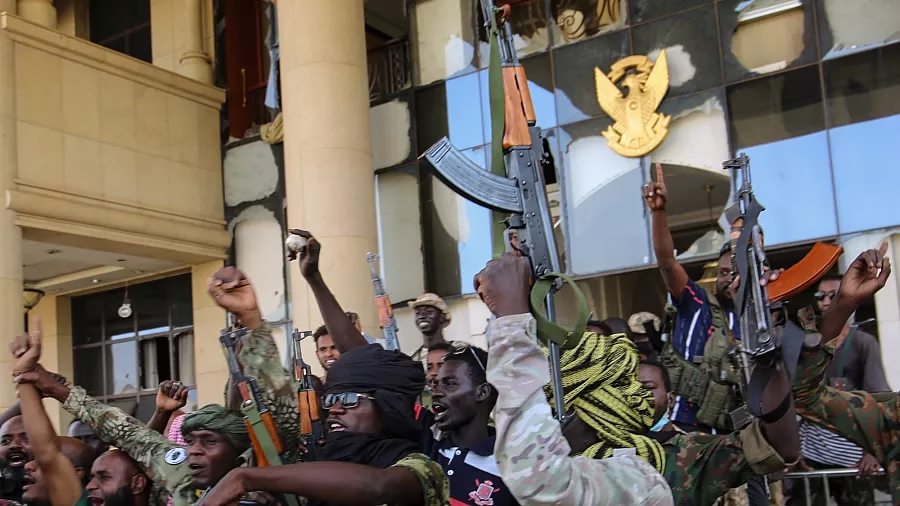
Idris, who was sworn in this May before Transitional Sovereignty Council Chairman General Abdel Fattah al-Burhan, stressed that his government’s mission is to “heal the wounds of war and restore normal life.” Khartoum became a battlefield in April 2023 when tensions between al-Burhan and RSF leader General Mohamed Hamdan Dagalo—known as Hemedti—erupted into all-out war. The dispute centered on the RSF’s integration into the national army and the stalled timeline for Sudan’s transition to civilian rule.
Although the army has retaken large swathes of territory from the RSF in recent months, the conflict is far from over. Fighting continues in parts of Darfur, Kordofan, and Blue Nile, with humanitarian agencies warning of famine, disease outbreaks, and mass civilian suffering. For many Sudanese, the cabinet’s return to Khartoum is a glimmer of hope—but it remains uncertain whether the fragile government can stabilize the country or pave the way for long-promised civilian leadership.