


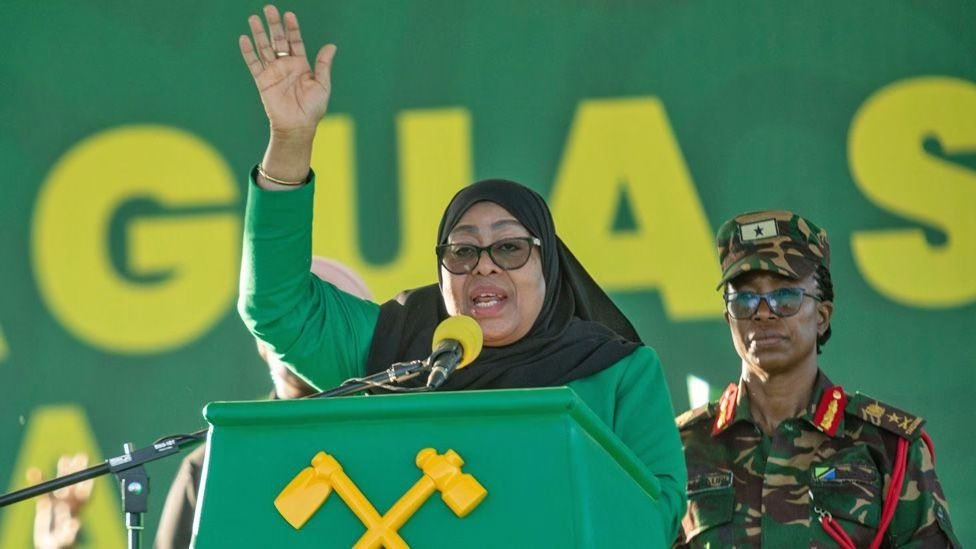
Polling stations opened across Tanzania on Wednesday for a closely watched general election marked by tight security, opposition arrests, and concerns over democratic freedoms. President Samia Suluhu Hassan, Africa’s only female head of state, is seeking a second term under the ruling Chama Cha Mapinduzi (CCM) party, which has held power continuously since independence in 1961. Her main challengers have either been barred from running or detained, prompting local and international scrutiny of the vote’s fairness. Observers say the election is a defining test of Tanzania’s political openness after decades of CCM dominance. “I call on the Zanzibar Electoral Commission (ZEC) to ensure justice and fairness, as citizens are waiting for transparency,” said Maryman Salum Suleiman, an independent observer in Zanzibar.
The pre-election climate has been fraught with tension. Tundu Lissu, the opposition leader of CHADEMA, remains in custody on treason charges after calling for electoral reforms. Another leading opposition candidate, whose name has not been released by the National Electoral Commission (NEC), was disqualified over alleged paperwork irregularities. Rights organizations say these actions have stifled dissent. Amnesty International reported “a pervasive climate of fear,” citing enforced disappearances, arbitrary arrests, and extrajudicial killings of political activists and journalists in the run-up to the polls. “Without accountability for these abuses, it’s hard to speak of a truly competitive election,” said Deprose Muchena, Amnesty’s Regional Director for East and Southern Africa.
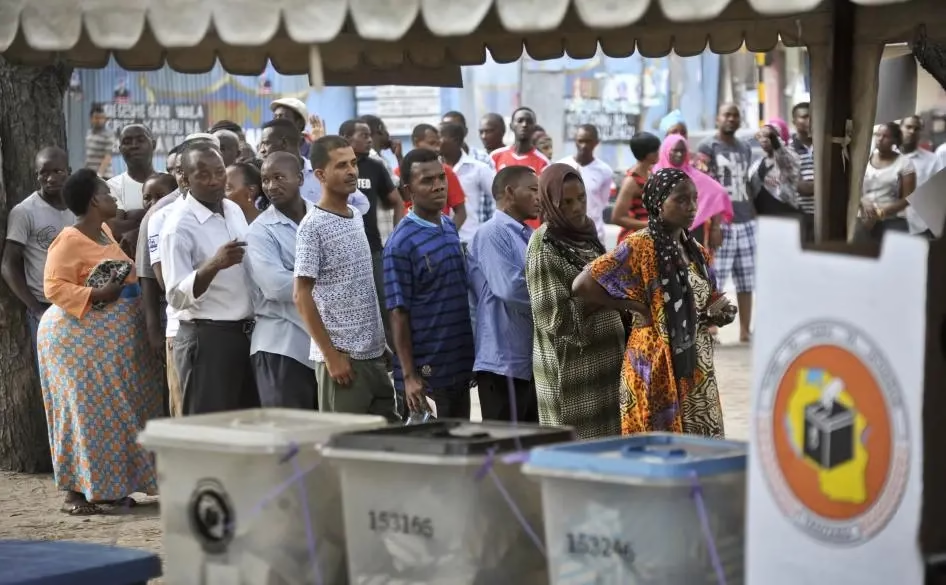
The National Electoral Commission confirmed that 37 million Tanzanians are registered to vote, up 26% from the 2020 elections. However, analysts predict low voter turnout, citing apathy and the widespread perception that Suluhu’s re-election is inevitable. Suluhu, who assumed office in 2021 after the death of former President John Pombe Magufuli, has sought to project an image of stability and reform. Her campaign emphasized anti-corruption efforts, infrastructure expansion, and women’s empowerment, but critics say her administration has continued to restrict opposition activity and media freedom. Election results are expected to begin trickling in within 48 hours. Regional blocs, including the East African Community (EAC) and Southern African Development Community (SADC), have deployed observer missions but have so far refrained from commenting on irregularities. For many Tanzanians, the outcome seems preordained, but the process not the result may ultimately determine whether Tanzania’s democracy is deepening or eroding.


