


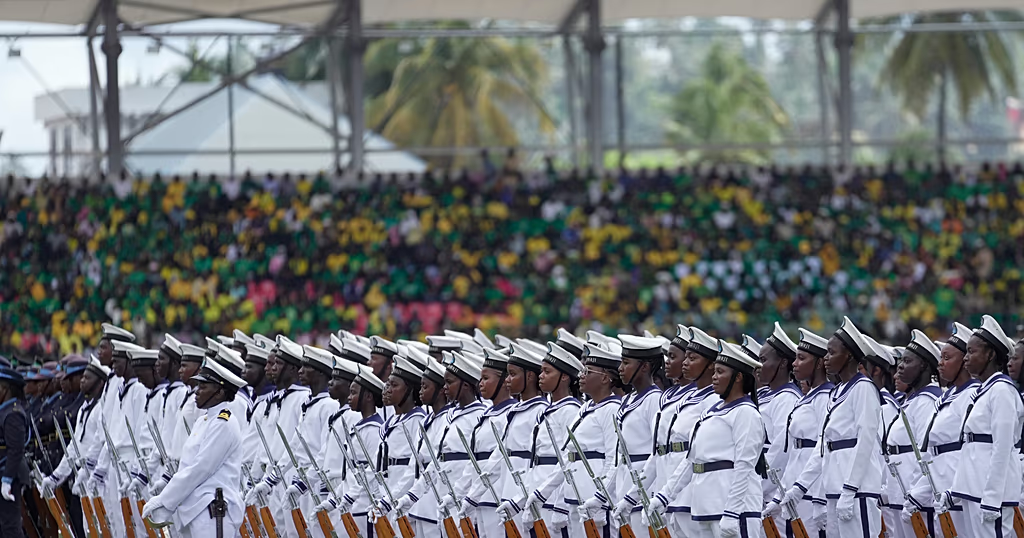
Tanzania has canceled its Independence Day celebrations on 9 December, Prime Minister Mwigulu Nchemba announced Monday, citing the need to redirect funds to rebuild infrastructure damaged during post-election unrest. The move follows opposition calls for protests on the national holiday over the mass killings that erupted after the disputed 29 October general election. President Samia Suluhu Hassan was declared the winner with 98% of the vote, a result rejected by opposition parties as “fabricated” and “not genuine.”
Key rivals were sidelined ahead of the election: Chadema leader Tundu Lissu remains in detention on treason charges since April, while ACT-Wazalendo’s Luhaga Mpina was disqualified on technical grounds. Following the election, thousands protested across the country. Security forces responded with a crackdown described by human rights groups as “violent and repressive.” Opposition leaders claim that hundreds of people were killed, though the government has not released an official death toll. A commission of inquiry has been established, but opposition parties question its independence.
Addressing the nation, Nchemba urged Tanzanians to avoid further violence and engage in dialogue. “I urge my fellow citizens to come together and discuss the issues affecting us. Let us not return to what we went through, because the consequences are irreparable,” he said. Tanzania’s decision to cancel the national celebrations highlights ongoing tensions and the challenges facing the country in addressing political unrest while maintaining national unity.


