


Tensions are rising once again in northern Ethiopia, where fears of renewed conflict in the Tigray Region are prompting civilians to flee even before fighting begins. In the regional capital Mekelle, dozens of residents many carrying suitcases and backpacks have been searching for buses and flights to the national capital Addis Ababa as anxiety grows over a possible return to war. The latest tensions come less than four years after the 2022 peace agreement that ended a devastating civil war between federal forces and fighters loyal to the Tigray People’s Liberation Front (TPLF). That conflict, which erupted in November 2020, killed tens of thousands of people, displaced millions and left large parts of the region in ruins.

Despite the peace deal, many key provisions such as the full disarmament of Tigrayan forces and the withdrawal of foreign troops have been only partially implemented. Relations between the federal government led by Prime Minister Abiy Ahmed and Tigray’s leadership remain deeply strained. Local officials and residents say federal troops have been massing near the borders of Tigray with the neighbouring Amhara Region and Afar Region. Reports of troop movements and sporadic clashes in January have heightened fears that hostilities could resume.
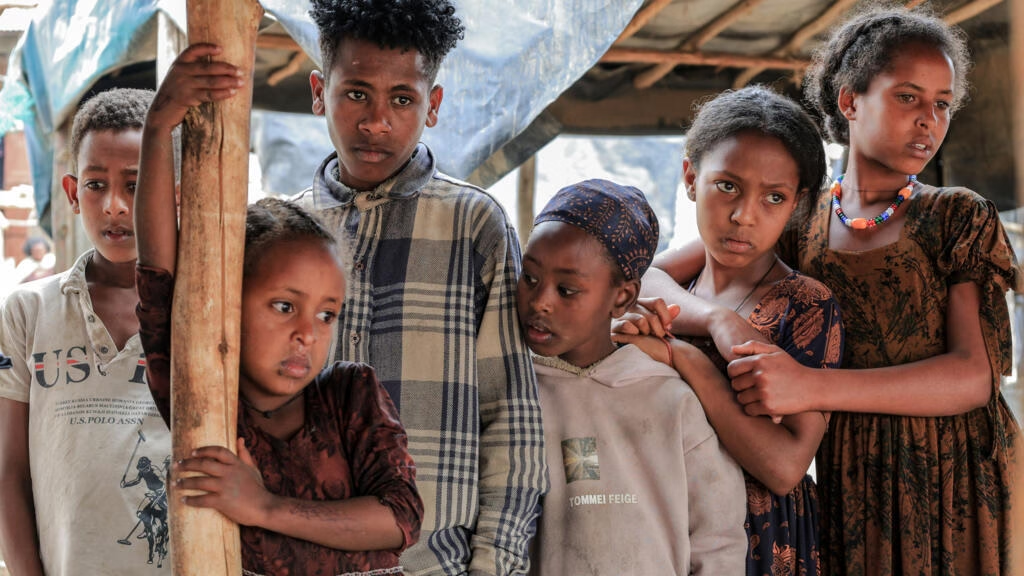
Hundreds of people are believed to be leaving the region daily by road and air, though exact figures are unclear. Before the war, Tigray was home to roughly six million people. Economic conditions in the region have also deteriorated. Federal authorities have reduced subsidies for months, leaving many civil servants unpaid while banks struggle with severe cash shortages. Basic goods are increasingly scarce, and informal fuel sellers have raised prices sharply from about 300 to 430 Ethiopian birr within days. In towns such as Chercher, about 150 kilometres south of Mekelle, residents say the atmosphere is tense and businesses are suffering as people prepare for the worst.
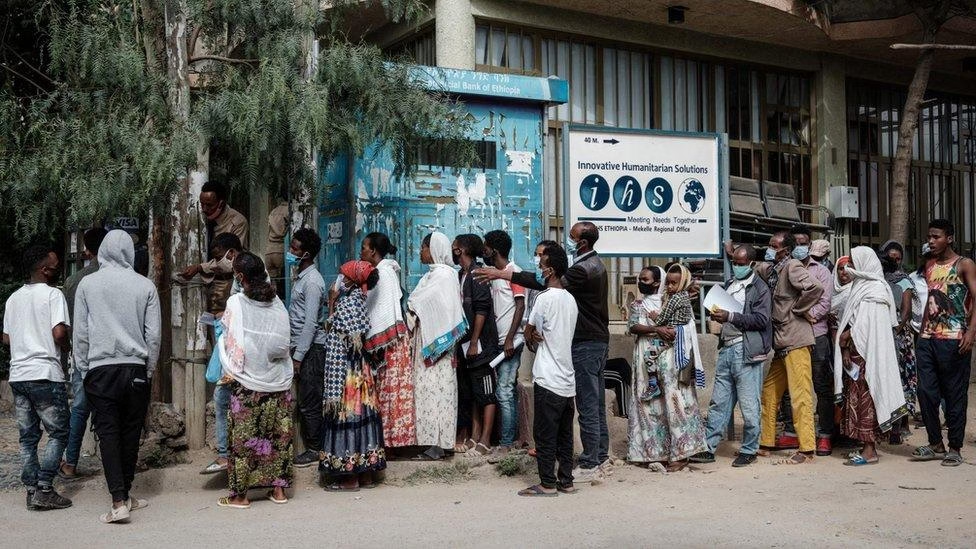
Amanuel Assefa, a senior official in the TPLF leadership, has warned that federal forces are positioning troops around the region and claimed Tigray is effectively being “encircled.” Prime Minister Abiy has said he does not want another war, delivering an unusual speech in the Tigrinya language in an apparent attempt to ease tensions. However, he also accused Tigray’s leadership of refusing compromise. For many civilians, the political standoff offers little reassurance. Residents fear that if negotiations fail, the region could once again plunge into a conflict that previously caused one of the world’s worst humanitarian crises.


