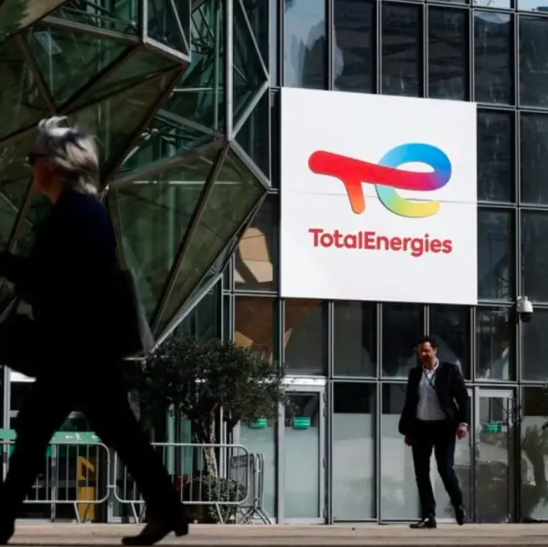

Four Ugandan farmers have filed a landmark legal case in the United Kingdom against TotalEnergies, seeking to stop the controversial East African Crude Oil Pipeline (EACOP) project over alleged environmental and constitutional violations. The lawsuit targets the US$5.6 billion pipeline, which is expected to begin operations in 2027. Stretching about 1,400 kilometres from Uganda’s oil fields to Tanzania’s Indian Ocean coast, EACOP is set to become the world’s longest heated crude oil pipeline. Supported by the global advocacy group Avaaz, the farmers argue that the project breaches Uganda’s environmental, climate and constitutional laws. They are asking the British court to issue an injunction that could prevent oil from flowing through the pipeline until their concerns are addressed.
Environmental organizations have long opposed the project, describing EACOP as a “carbon bomb” because of its potential to generate hundreds of millions of tones of greenhouse gas emissions over its lifetime. Campaigners have also warned about the pipeline’s impact on biodiversity, particularly near Murchison Falls National Park, one of Uganda’s most important wildlife conservation areas. TotalEnergies, the project’s lead developer, has rejected claims that the pipeline poses unacceptable environmental risks. The company says it has implemented comprehensive environmental and social safeguards designed to reduce the project’s impact on communities and ecosystems while complying with international standards.
The case is widely viewed as the first time Uganda’s environmental laws have been tested before a British court, making it a significant legal precedent with potential implications for multinational companies involved in large-scale energy projects across Africa. The outcome is expected to be closely watched by governments, investors, environmental groups and the global energy industry as debates over fossil fuel development and climate responsibility continue to intensify.