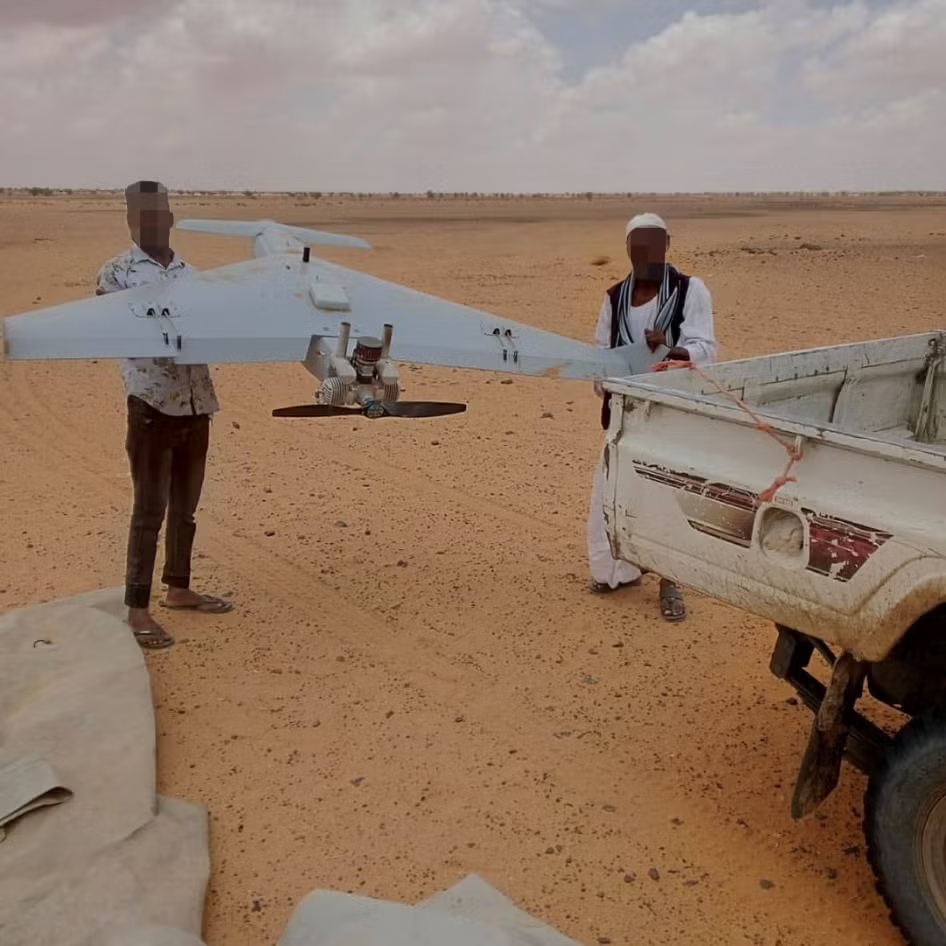

The United States has called on the UN Security Council to expand its long-standing arms embargo on Sudan’s Darfur region to cover the entire country, warning that foreign military support is prolonging the war and increasing the risk of wider regional instability. US Africa envoy Massad Boulos presented the proposal at a Security Council meeting on Monday, urging countries to stop providing military and financial support to Sudan’s rival forces. The proposed measures would explicitly include drones, drone systems and related technologies, while also strengthening the UN panel responsible for monitoring sanctions. The existing UN arms embargo was imposed in 2005 and applies only to Darfur. Its current mandate is due to expire in September unless the council renews or changes it. Expanding the embargo nationwide would require Security Council approval.
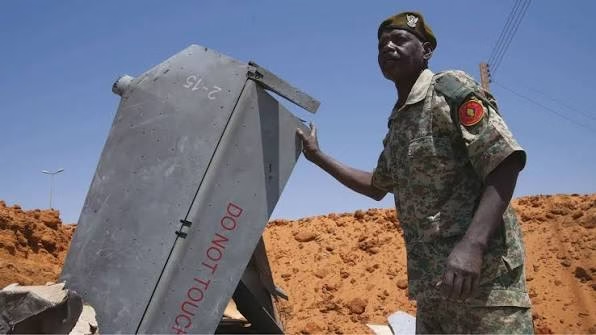
The proposal comes as drone attacks have become an increasingly deadly feature of Sudan’s war. UN political chief Rosemary DiCarlo told the council that about 1,400 civilian deaths were documented between January and June 2026, including around 1,100 attributed to drone strikes. She said the figures represent only deaths the UN has been able to verify, while the overall death toll since the war began is likely in the hundreds of thousands. The conflict began in April 2023 after a power struggle between the Sudanese Armed Forces, led by General Abdel Fattah al-Burhan, and the paramilitary Rapid Support Forces (RSF), commanded by General Mohamed Hamdan Dagalo, known as Hemedti.
The war has displaced about 13 million people, including roughly 8.7 million internally displaced, according to the UN. Fighting has also created severe food shortages and famine conditions in parts of the country. The US proposal faces opposition from Russia, China and Sudan’s government. Sudan’s UN ambassador, Al-Harith Idriss, argued that extending the embargo would unfairly weaken the national army and undermine the government’s ability to protect civilians. Russia and China have also warned against expanding sanctions, calling instead for stronger enforcement of existing measures and greater emphasis on diplomacy. The United States says the proposed restrictions are intended to apply equally to both sides and to reduce the flow of outside support that is sustaining the conflict.
The debate comes as the Sudanese army and RSF continue fighting for territorial control, with the army holding much of central and eastern Sudan while the RSF maintains substantial influence across Darfur and other areas. UN officials have warned that the continued escalation is worsening an already catastrophic humanitarian situation and could pull neighboring countries deeper into the conflict. For now, the proposal faces a difficult path at the Security Council, where Russia and China hold veto power. Its future will depend on whether Washington can secure sufficient support for a vote and overcome opposition from the council’s permanent members.